
The United Arab Emirates has suspended all trade, commercial exchanges and financial transactions with Iran after Emirati officials accused Tehran of launching two missiles toward the country on August 18.
The UAE Ministry of Defense said the two missiles were detected at around 6:52 p.m. local time and were directed toward commercial maritime shipping channels. Both missiles fell into the sea, with one landing outside the UAE’s territorial waters and the other inside them.
Afraa Al Hameli, the UAE’s director of strategic communications, announced that all trade, commercial exchanges and financial transactions with Iran would be suspended until further notice.
The UAE Foreign Ministry said the country remains committed to protecting the integrity of the international financial system and upholding international law.
The UAE Ministry of Defense warned that Abu Dhabi would respond to any attempt to threaten the country’s security or the safety of maritime navigation.
Iran has rejected the UAE’s accusation. Esmaeil Baghaei, spokesperson for Iran’s Foreign Ministry, described the allegation as “baseless” early Wednesday.
The incident is being described as the first missile attack attributed to Iran against the UAE in several weeks. Iranian attacks on Gulf states reportedly declined after an initial ceasefire agreement between Tehran and Washington on June 17.
The UAE was among the Gulf states targeted by Iranian missiles and drones during the recent confrontation involving Iran, the United States and Israel. Tehran said at the time that it was targeting U.S. military facilities and positions of countries allied with Washington in the region.
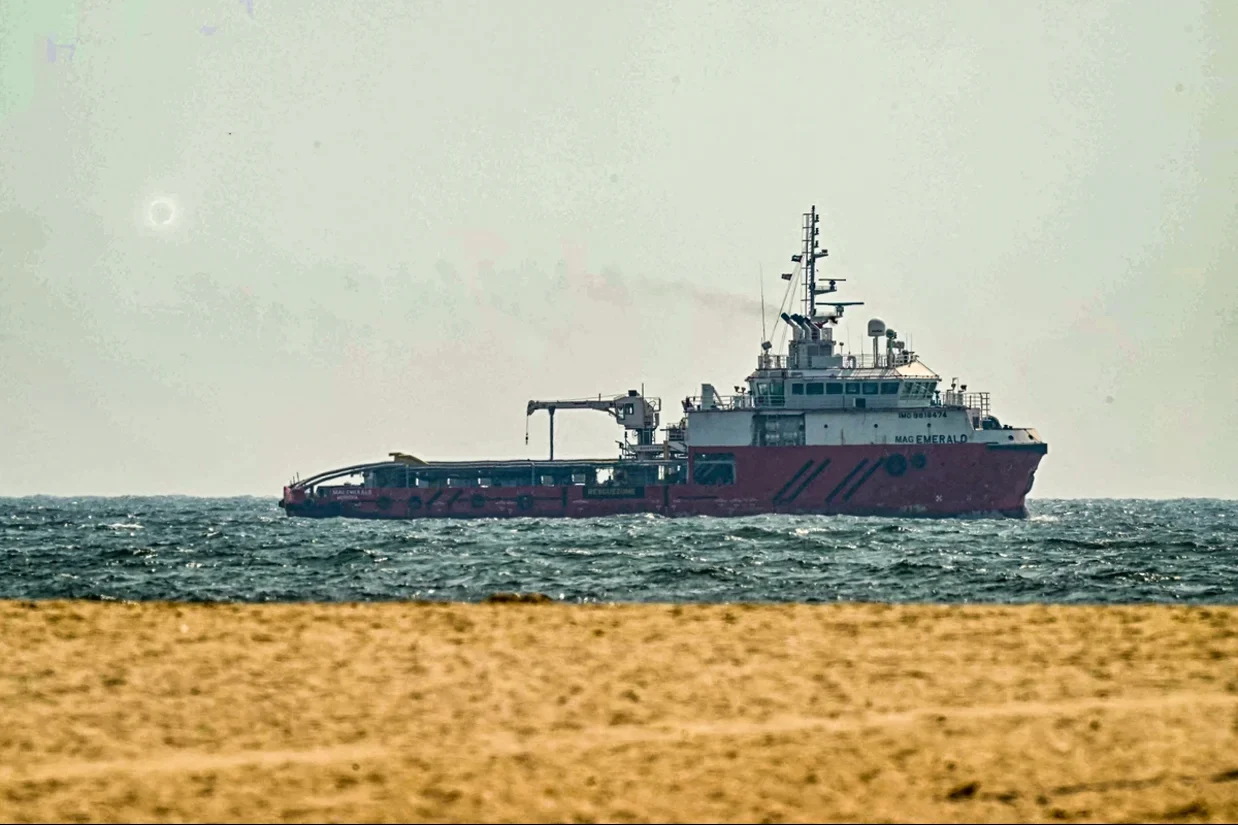
The latest escalation comes just three days after the UAE accused Iran of attacking a vessel belonging to the Abu Dhabi National Oil Company while it was transiting the Strait of Hormuz. Emirati authorities said the incident threatened regional stability and energy security.
Tensions over the Strait of Hormuz and the broader dispute between Tehran and Washington also remain unresolved. U.S. President Donald Trump said Tuesday that no negotiations with Iran were taking place and described the Strait of Hormuz as “open and active.”
Iranian officials, however, continue to attach conditions to the reopening of the waterway. Parliament Speaker Mohammad Bagher Ghalibaf has outlined demands linked to the broader dispute between Tehran and Washington.
The UAE’s decision to suspend economic and financial ties with Iran could add significant political and economic pressure to an already strained relationship.
If the suspension continues, it could also affect regional trade, financial flows and maritime activity in the Gulf, particularly as concerns over the security of one of the world’s most important energy routes remain elevated.
However, the central allegation behind the latest escalation remains disputed: the UAE attributes the missile launches to Iran, while Tehran categorically denies responsibility.