
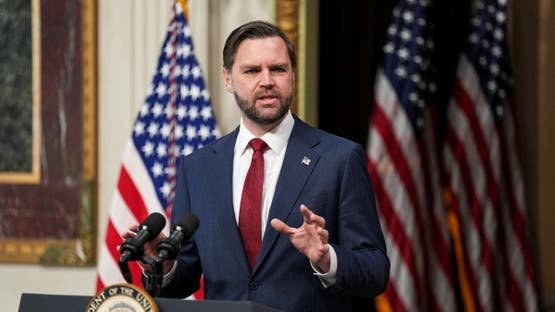
U.S. Vice President J.D. Vance has announced that the 60-day implementation period outlined in the memorandum of understanding between Washington and Tehran officially began on Thursday.
Speaking during a White House press conference, Vance said the countdown had formally started and noted that approximately 12.5 million barrels of oil had already moved through international shipping routes since the memorandum was signed.
According to the vice president, Iran has not carried out any attacks against commercial shipping during this period, and the initial phase of the agreement has proceeded without major incidents.
Vance stated that while Iran would retain the right to defend itself, Washington expects Tehran to comply with provisions that would prevent it from possessing missile systems capable of posing a broad threat to regional and international security.
He also identified stability in Lebanon as one of the central objectives of the agreement. Vance said the United States wants the Lebanese government to exercise full control over southern Lebanon and for state institutions to replace the influence of Hezbollah in the area.
According to him, such a development would reduce security concerns for Israel and help create conditions for ending military operations targeting southern Lebanon and Beirut.
The vice president further claimed that Iran’s nuclear weapons program had been effectively dismantled and argued that Tehran currently lacks the capacity to build a nuclear weapon.
“If Iran decided tomorrow to build a nuclear weapon, it simply does not have the capability to do so,” Vance said.
He emphasized that Washington’s goal extends beyond temporarily delaying Iran’s nuclear ambitions. The United States, he said, wants to ensure that Tehran remains unable to rebuild such capabilities for many years.
Vance added that any final agreement should include measures to halt Iranian financial support for what Washington describes as destabilizing groups in the region, as well as mechanisms preventing the re-emergence of a nuclear weapons program.
His remarks come as preparations continue for the next stage of negotiations between Tehran and Washington, with both sides expected to enter detailed discussions on implementation, security arrangements and long-term commitments in the coming weeks.
The 60-day period is widely viewed as a critical phase that could determine whether the current memorandum evolves into a broader and more comprehensive agreement between the two longtime rivals.