
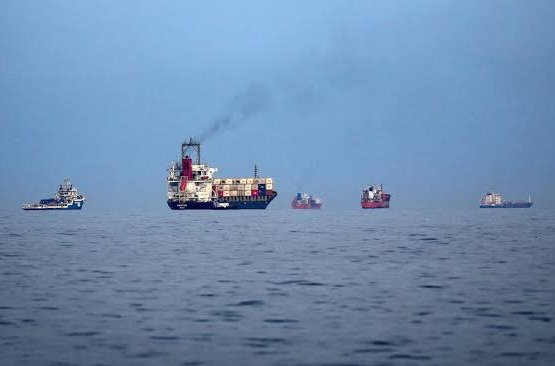
Ship-tracking data show that three Saudi Arabian supertankers carrying approximately six million barrels of crude oil passed through the Strait of Hormuz just hours after the signing of the memorandum of understanding between the Islamic Republic of Iran and the United States.
Reuters described the movement as the largest Saudi tanker departure through the Strait of Hormuz in recent weeks, highlighting the significance of the shipment after a period of severe disruption caused by regional tensions and conflict.
According to reports, Saudi Arabia relied heavily on its Yanbu export terminal on the Red Sea coast during the recent crisis in an effort to reduce dependence on the Strait of Hormuz and maintain access to international markets.
The conflict, which began in late February, disrupted tanker traffic across the Gulf and prevented hundreds of millions of barrels of regional oil production from reaching global consumers.
The transit of the three very large crude carriers (VLCCs) is being viewed as one of the first tangible signs that normal energy export operations are beginning to resume through the Gulf’s most important maritime corridor.
Energy analysts say a full reopening of the Strait of Hormuz could ease pressure on global energy markets, improve supply security and help stabilize oil prices after months of uncertainty.
The Strait of Hormuz remains one of the world’s most strategically important waterways. A significant share of global crude oil and liquefied natural gas exports passes through the narrow channel connecting the Persian Gulf to international shipping routes.
The return of large-scale tanker traffic is likely to be closely monitored by traders, governments and energy companies seeking confirmation that maritime operations in the region can continue without major disruption.
From NIMRUZ TV’s perspective, the movement of these tankers is not only an energy story but also a key indicator of regional stability. The speed at which commercial shipping resumes normal operations may become one of the most visible measures of confidence in the diplomatic understandings reached between Tehran and Washington.