
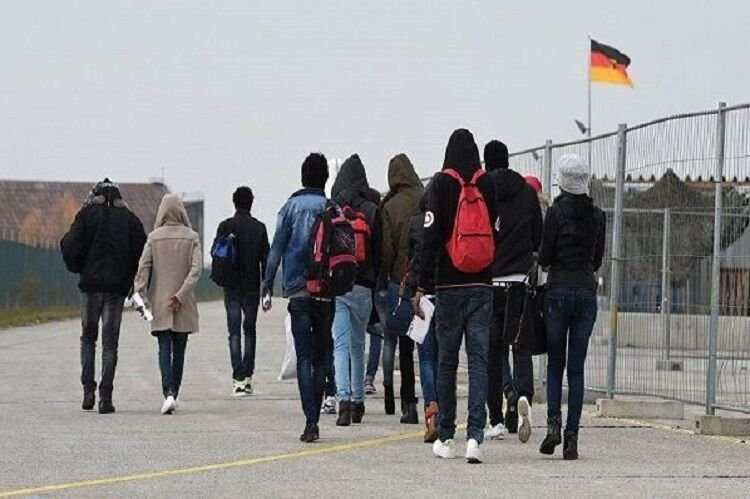
German media outlets have reported that since the beginning of 2025, only around 220 people have voluntarily returned to Afghanistan using financial assistance provided by the German government — a figure described as extremely low compared to approximately 4,500 returnees to Syria during the same period.
According to the reports, the number of people using Germany’s voluntary return assistance program has fallen far below expectations.
German media noted that while both Afghanistan and Syria continue to face severe economic and humanitarian crises, the sharp difference in return numbers suggests that financial incentives alone are not enough to convince people to go back.
Under the program, individuals returning to Afghanistan or Syria receive flight tickets, travel assistance, and roughly 1,000 euros to help restart their lives.
For families, the assistance can rise to up to 4,000 euros.
The reports said some political groups in Germany, including the Left Party, argue that such amounts are insufficient for rebuilding lives in conflict-affected countries.
The newspaper Frankfurter Allgemeine reported that the direct cost of Germany’s federal voluntary return program “REAG/GARP” reached around 20 million euros in 2025.
The report also stated that several European countries provide larger return packages than Germany and that Berlin itself previously offered more extensive support.
However, the newspaper stressed that money is not the central issue for many refugees.
Instead, confidence in the political, security, and economic future of their home countries appears to be the decisive factor.
Frankfurter Allgemeine wrote that Afghanistan and Syria are currently viewed very differently in terms of public confidence about future stability.
In recent years, many Afghan refugees have refused to return because of concerns related to security, human rights conditions, Taliban restrictions, and Afghanistan’s ongoing economic crisis.
Analysts say the figures highlight a broader challenge facing European migration policies, which increasingly rely on voluntary return programs instead of forced deportations.
Observers note that the low number of Afghan returnees suggests that fear, insecurity, and lack of trust in Afghanistan’s future continue to outweigh financial incentives offered by European governments.
The debate has also deepened political divisions inside Europe, where anti-immigration groups demand faster returns while human rights advocates argue that Afghanistan remains unsafe for many refugees.