

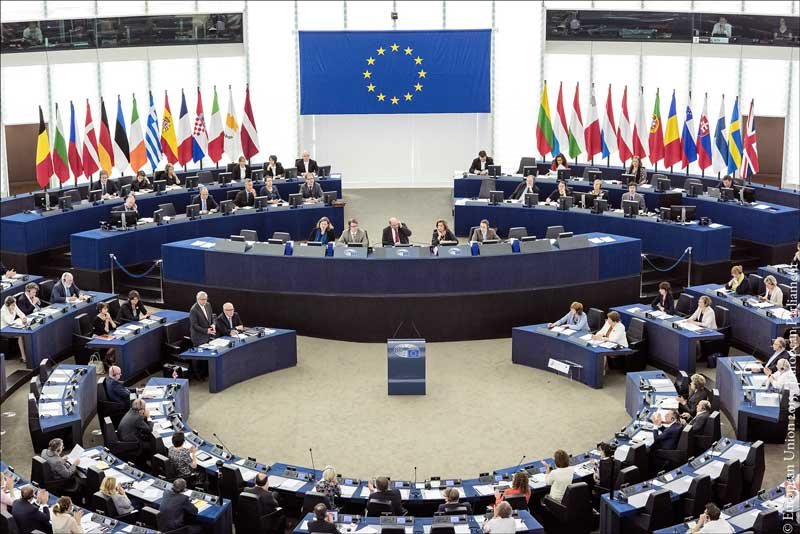
The European Parliament on Thursday adopted a resolution condemning the human rights situation in Afghanistan and strongly criticizing the Taliban’s newly approved penal code.
During a plenary session, European lawmakers said the Taliban’s judicial regulations contribute to the systematic persecution of women and girls, corporal punishment, structural discrimination, and widespread violations of fundamental rights.
The European Parliament called on the Taliban to immediately repeal the penal code and end public floggings, executions, and restrictions imposed on women, girls, religious minorities, LGBTQ individuals, and other vulnerable groups.
Lawmakers also emphasized the implementation of International Criminal Court arrest warrants, the expansion of human rights sanctions against Taliban leaders, and the continuation of the policy of “non-recognition and non-normalization” toward the Taliban government.
The resolution passed with 480 votes in favor, five against, and 83 abstentions.
The Taliban leader approved the penal code last year, and the document has since faced widespread criticism from human rights organizations and the international community.
Critics argue that the code legitimizes severe punishments and further restricts the fundamental rights of citizens, particularly women and minorities.
At the same time, the United Nations Assistance Mission in Afghanistan (UNAMA) also criticized the Taliban’s recently issued regulations regarding marital separation, warning that the document further institutionalizes child marriage and discrimination against women.
During the same session, the European Parliament also adopted resolutions concerning human rights conditions in Iran and Indonesia.
In the section related to Iran, European lawmakers called for expanded sanctions against Iranian officials and the Islamic Revolutionary Guard Corps while condemning executions in the country.
Analysts say the resolutions reflect growing European political and human rights pressure on governments accused of systematic rights violations.
Observers note that the European Parliament’s focus on the Taliban’s legal and judicial system marks a significant shift from criticizing individual policies to challenging the broader legitimacy of the Taliban’s governance framework itself.
Experts believe the overwhelming support for the resolution demonstrates broad political consensus across Europe against the Taliban’s current policies and suggests that major changes in Europe’s approach toward the group remain unlikely in the near future.