
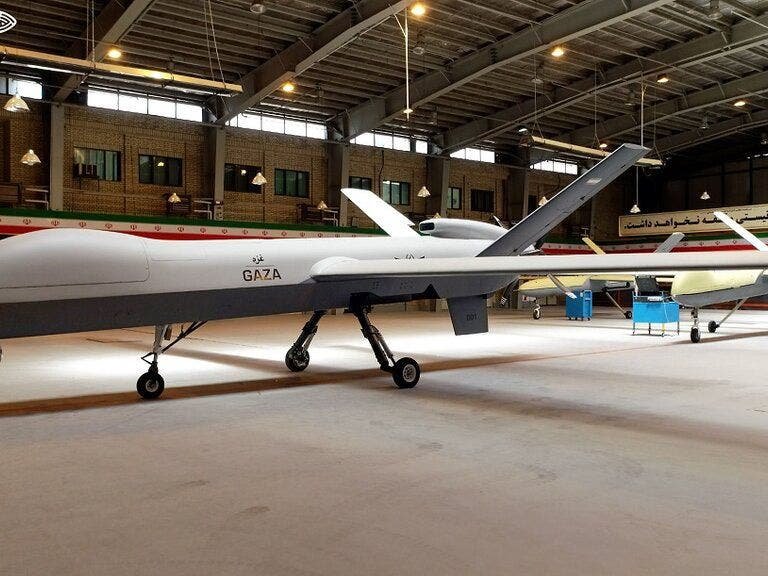
New US intelligence assessments indicate Iran has resumed parts of its drone production during the six-week ceasefire and is rebuilding key military capabilities faster than initially expected.
CNN, citing multiple informed sources, reported that Tehran restarted portions of its drone production lines in early April, shortly after the ceasefire began.
According to four sources familiar with the intelligence, Iran’s military has been replacing missile sites, launchers, and production capacity for several key weapons systems damaged or destroyed during US and Israeli strikes.
Officials say the recovery effort suggests Tehran could still pose a significant threat to Washington’s regional allies if military confrontation resumes.
One US official told CNN that some intelligence assessments indicate Iran may fully restore its drone strike capability within six months.
“The Iranians are ahead of all intelligence community timelines for rebuilding,” the official said.
According to the report, one of the main concerns among US allies in the region is Iran’s ability to rapidly expand drone attacks, potentially compensating for reductions in missile capacity.
CNN also reported that Iran’s recovery has moved faster than expected partly because of support from Russia and China, as well as because some military infrastructure survived the American and Israeli attacks.
Two informed sources said China provided components during the conflict that could be used in missile production, although US restrictions reportedly limited the scale of those transfers.
Israeli Prime Minister Benjamin Netanyahu claimed last week that China was supplying Iran with “missile production components,” an accusation rejected by China’s Foreign Ministry.
Recent US intelligence assessments reportedly conclude that despite major damage, Iran has preserved parts of its ballistic missile arsenal, drone fleet, and air defense systems.
CNN previously reported that roughly half of Iran’s missile launchers survived the attacks, but updated intelligence now estimates that nearly two-thirds remain operational.
Sources familiar with the assessments said part of the increase comes from Iran recovering launchers buried under rubble during the ceasefire period.
The report also states that thousands of Iranian drones remain intact and that approximately 50 percent of the country’s drone capability has survived.
US intelligence officials additionally believe that a significant portion of Iran’s coastal defense cruise missiles remains operational — weapons considered central to Tehran’s ability to threaten shipping traffic in the Strait of Hormuz.
Despite the damage inflicted during the strikes, informed sources said attacks on Iran’s defense industrial base likely delayed reconstruction by months rather than years because significant sections of military infrastructure remained intact.