
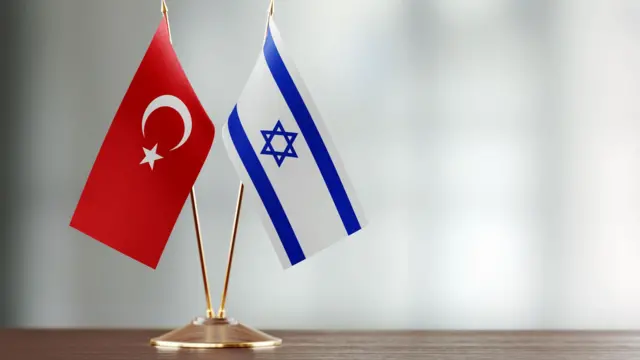
Relations between Turkey and Israel, which had moved toward diplomatic normalization over the past three years, have now deteriorated to a point where concerns about possible direct military confrontation are increasingly being discussed.
Tensions intensified after a sharp exchange of accusations between the leaders of the two countries.
Israeli Prime Minister Benjamin Netanyahu accused Turkish President Recep Tayyip Erdoğan of supporting what he described as Iran’s “terrorist regime” and suppressing Kurdish groups.
In response, Erdoğan accused Israel of killing Palestinians in Gaza and described Netanyahu’s remarks as “shameless.”
The escalating rhetoric comes at a time when analysts warn that the possibility of direct confrontation between the two regional powers is higher than at any point in recent years, even as diplomatic efforts continue to prevent the political crisis from turning into military conflict.
The growing tension reflects not only bilateral disputes but also a wider regional struggle involving influence in the Middle East, the Palestinian issue, relations with Iran, and broader security calculations.
As both Turkey and Israel possess significant military and intelligence capabilities, even a limited clash could quickly expand beyond bilateral tensions and draw in additional regional actors.
Despite the increasingly aggressive language, observers note that both governments appear aware of the potentially high cost of direct conflict and may still be seeking to contain the crisis within the realm of political confrontation rather than military escalation.