

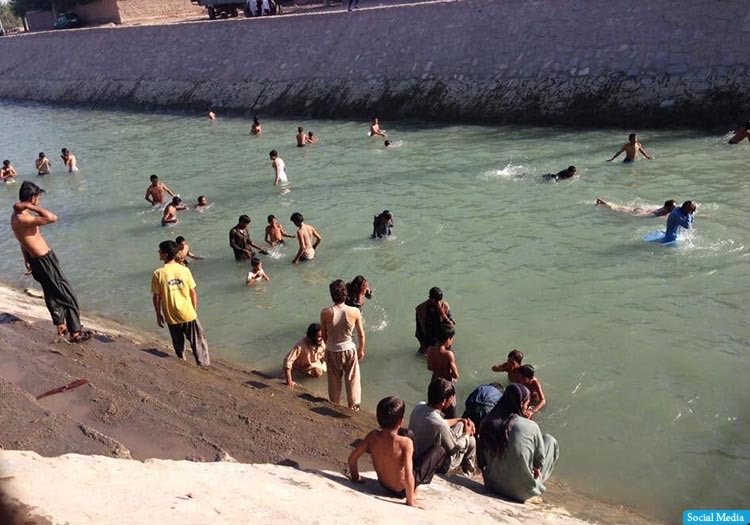
Three teenagers have drowned while swimming in a river in eastern Afghanistan’s Nangarhar province, highlighting a growing number of fatal water accidents reported across the country since the start of the summer season.
Local Taliban authorities said the incident occurred on Friday afternoon near the Behsud Bridge area, where a group of young people had gathered to swim and cool off during the warm weather.
Sayed Tayeb Hamad, spokesperson for the Taliban police command in Nangarhar, said the victims were among a group of friends who had gone to the river for recreation when they were swept under the water.
According to Hamad, the victims were aged 13, 15, and 17. Rescue teams recovered the bodies of two of the teenagers and handed them over to their families, while efforts to locate the third victim were still ongoing as of Saturday.
The tragedy is the latest in a series of drowning incidents reported across Afghanistan in recent weeks. Similar cases have recently been recorded in Daikundi, Panjshir, Paktika, Ghazni, and Khost provinces.
Available reports indicate that at least 20 people have died in separate drowning incidents across Afghanistan since the beginning of June, raising concerns about public safety around rivers, canals, and reservoirs.
Safety experts say drowning accidents tend to increase sharply during the summer months as children and teenagers seek relief from high temperatures in rivers and other natural water sources. In many parts of the country, however, there are few safe recreational facilities or supervised swimming areas.
Experts also point to the absence of rescue equipment, limited public awareness about the dangers of deep or fast-moving water, and a lack of swimming safety education as key factors contributing to the rising number of fatalities.
Many rivers in Afghanistan experience strong currents and sudden changes in water depth, creating hazardous conditions even for experienced swimmers. Without trained lifeguards or emergency response infrastructure, accidents can quickly turn fatal.
The deaths in Nangarhar underscore a broader public safety challenge facing communities across Afghanistan. As temperatures continue to rise and more young people gather near rivers and canals, authorities and community leaders face growing pressure to improve safety awareness and reduce preventable drownings.
Beyond this individual tragedy, the incident reflects a recurring pattern seen every summer across the country. Unless greater attention is given to water safety education, emergency preparedness, and the creation of safer recreational spaces, similar incidents are likely to continue claiming lives in the months ahead.