
Afghanistan once again emerged as a central topic in regional security discussions after Pakistan’s Interior Minister Mohsin Naqvi claimed that what he described as “terrorist camps” inside Afghanistan continue to pose serious security concerns for neighboring countries.
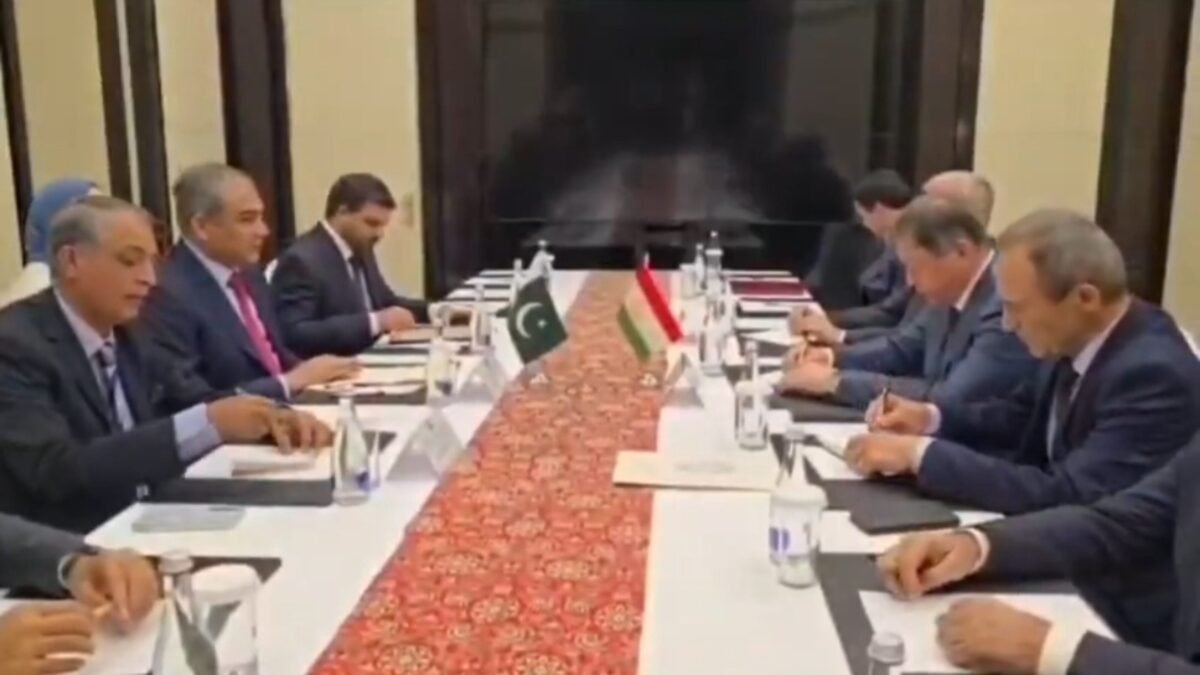
Naqvi made the remarks during a meeting with Tajik Interior Minister Ramazon Rahimzoda on the sidelines of a gathering of interior and national security ministers from member states of the Shanghai Cooperation Organization (SCO) in Bishkek, the capital of Kyrgyzstan.
Regional security, counterterrorism cooperation, and efforts to combat transnational threats were among the main issues discussed during the conference, which brought together senior officials from across Eurasia.
According to Pakistani media reports, the two ministers exchanged views on Afghanistan’s security situation, the activities of armed groups, and the trafficking of narcotics. The reports further claimed that approximately 25 armed groups are currently operating inside Afghanistan, although that figure has not been independently verified.
Naqvi argued that security threats originating from Afghanistan are not confined to a single country and could affect stability throughout the wider region. He called for stronger cooperation among regional states to address what he described as shared security challenges.
“The threats facing the region require collective action and closer coordination among neighboring countries,” Pakistani media quoted him as saying.
As of the publication of this report, Tajik authorities had not publicly released details of the meeting or formally commented on the specific claims made by the Pakistani minister.
The remarks come against the backdrop of continuing disagreements between Pakistan and the Taliban administration over security issues. Taliban officials have consistently denied that terrorist organizations are operating from Afghan territory and maintain that they do not allow any individual or group to use Afghanistan as a base for attacks against other countries.
Islamabad, however, has repeatedly accused the Taliban of failing to prevent members of Tehrik-i-Taliban Pakistan (TTP) and the Baloch Liberation Army from operating from within Afghanistan. Pakistani officials argue that these groups continue to threaten Pakistan’s internal security.
The Taliban have rejected those allegations. Taliban spokesperson Zabihullah Mujahid has previously described the TTP issue as Pakistan’s internal matter and said Afghan territory is not being used to launch attacks against neighboring states.
Security tensions have become one of the most contentious aspects of relations between Kabul and Islamabad since the Taliban returned to power in 2021. Border incidents, militant attacks, and repeated exchanges of accusations have contributed to a significant deterioration in trust between the two sides.
The significance of Naqvi’s latest remarks extends beyond bilateral relations. They reflect a broader regional concern that Afghanistan remains closely linked to discussions surrounding extremism, cross-border militancy, and narcotics trafficking. Russia, China, Pakistan, and several Central Asian states have repeatedly called for assurances that Afghan territory will not be used to threaten regional security.
While the Taliban continue to insist that they maintain full control over Afghanistan and have improved security across the country, the persistence of such concerns demonstrates that Afghanistan remains a major focus of regional security diplomacy. The issue is likely to remain high on the agenda of future meetings involving regional organizations as neighboring countries seek greater clarity about the long-term security landscape following the Taliban’s return to power.