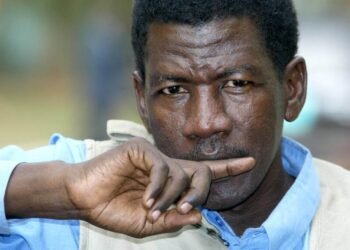

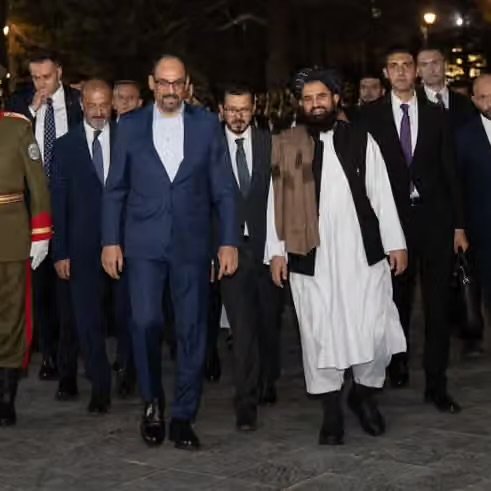
A report by Afghan journalist and political analyst Sami Yousafzai about Turkish intelligence chief İbrahim Kalın’s recent visit to Afghanistan has triggered a sharp backlash from Taliban-linked figures and social media users, turning a sensitive diplomatic visit into a wider dispute over media reporting, Taliban decision-making and relations with Pakistan.
Yousafzai wrote on X that during Kalın’s visit to Kabul and Kandahar, some of the issues raised by the Turkish delegation were referred from Taliban officials in Kabul to Kandahar because, according to his account, they were considered beyond the authority of officials in the capital.
Independent reporting confirms that Kalın travelled to both Kabul and Kandahar in September and held meetings with senior Taliban officials.
According to Turkish security sources cited by Anadolu, Kalın met Taliban intelligence chief Abdul Haq Wasiq in Kabul, as well as Deputy Prime Minister for Economic Affairs Abdul Ghani Baradar, Defence Minister Mohammad Yaqoob Mujahid and Interior Minister Sirajuddin Haqqani. The discussions reportedly focused on bilateral relations, security and intelligence cooperation, counterterrorism, human trafficking, drug trafficking and regional developments.
In Kandahar, the Taliban governor’s office said Kalın met Governor Mohammad Shirin Akhund at Jamiat Omar. The meeting reportedly covered bilateral relations, regional security and stability, counternarcotics and coordination between Türkiye and Afghanistan.
The meeting with Mullah Shirin is therefore independently supported by multiple reports. There is also separate reporting that Kalın did not meet Taliban leader Hibatullah Akhundzada during the Kandahar visit.
Afghanistan’s Hasht-e Subh newspaper, citing local sources, reported that Akhundzada had initially agreed to meet the Turkish delegation but withdrew from the meeting at the last moment. The same report said Mullah Shirin subsequently met Kalın and spoke on behalf of the Taliban leader.
Yousafzai’s account contains additional details that have not been independently established. Among them is an alleged statement attributed to Akhundzada that the Turkish delegation was “Western” and should not be brought to his office.
There is currently no independent confirmation of that alleged quotation.
The location of the Kandahar meeting has also attracted attention. The Taliban governor’s office said the meeting took place at Jamiat Omar after the Turkish delegation visited several religious and historical sites in Kandahar. Some reports have described the setting as unusual for a meeting involving a senior foreign security official, but the religious venue itself is not disputed.
Another part of Yousafzai’s account concerns Kalın’s subsequent visit to Pakistan. Kalın did travel to Islamabad after Afghanistan, where Turkish sources said he met Prime Minister Shehbaz Sharif, army chief Asim Munir and Inter-Services Intelligence chief Asim Malik.
The broader purpose of Türkiye’s engagement appears to have included regional security and efforts to ease tensions between Kabul and Islamabad. Turkish and Qatari officials have separately been involved in efforts to facilitate dialogue between the Taliban and Pakistan.
However, Yousafzai’s claim that Kalın specifically warned Pakistani officials about Taliban conduct, or characterized expectations of “logical behaviour” from the Taliban as self-deception, has not been independently confirmed.
The controversy intensified after the publication of Yousafzai’s report. Several Taliban-linked social media users accused the journalist of working for Pakistan’s intelligence establishment.
Qari Saeed Khosti, a Taliban official associated with the registration and publication of jihadist works at the Ministry of Information and Culture, reportedly amplified such accusations and described Yousafzai as a “double agent.”
Other social media users made similar allegations.
No independent evidence was presented with those accusations to establish that Yousafzai works for Pakistan’s intelligence services. They should therefore be treated as political and media allegations rather than established facts.
The episode illustrates a wider problem surrounding reporting on Taliban diplomacy: information about closed-door meetings is often based on official statements, anonymous sources or accounts from individuals close to the parties involved. Separating confirmed events from claims about what happened behind closed doors is therefore particularly important.
What can be established is that Kalın visited Kabul and Kandahar, met several senior Taliban officials, met Mullah Shirin in Kandahar and subsequently travelled to Pakistan. The reported discussions included security cooperation and regional issues, while other reporting has linked the diplomatic effort to tensions between Afghanistan and Pakistan.
What remains less certain is what happened inside the meetings that were not publicly documented, whether Hibatullah Akhundzada was expected to meet Kalın and why such a meeting reportedly did not take place.
The dispute over Yousafzai’s reporting is consequently about more than one journalist. It highlights the sensitivity surrounding the Taliban’s dealings with regional powers at a time when relations between Kabul and Islamabad remain strained and Türkiye is seeking a role in regional diplomacy.
It also demonstrates the importance of evidence when serious accusations such as espionage are made against journalists. Criticism of a report and allegations of intelligence cooperation are not equivalent claims and require different standards of verification.
For Nimruz, the key distinction is clear: the Turkish intelligence chief’s visit and several of his meetings are documented; claims about a cancelled meeting with Hibatullah, the alleged quotation attributed to the Taliban leader and the alleged message delivered to Pakistan remain claims requiring further independent verification.
As regional intelligence and diplomatic contacts with the Taliban increase, the credibility of reporting about these closed-door engagements will increasingly depend on that distinction between what is documented, what is attributed to sources and what remains unverified.