
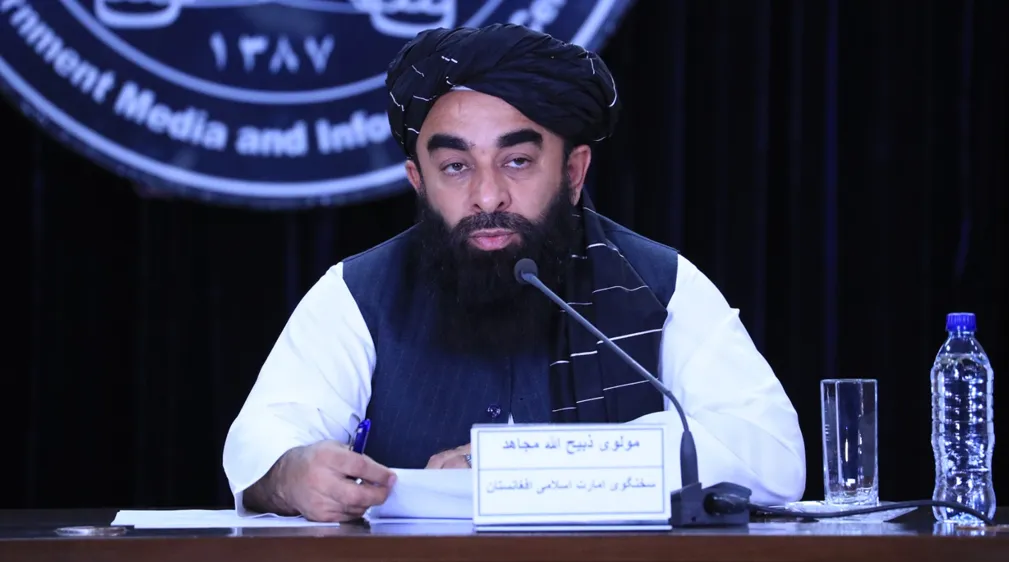
More than 99,000 cancer patients received services at public health facilities in Afghanistan over the past year, according to Taliban spokesperson Zabihullah Mujahid.
Mujahid made the statement at a news conference in Kabul on Wednesday, saying the figure covers patients registered at government health facilities and who received medical services during the 1447 Islamic calendar year.
According to his account, the period runs from 6 Saratan 1404 to 26 Jawza 1405 in the Afghan solar calendar.
Mujahid also said a 200-bed hospital for the diagnosis and treatment of cancer has begun operating in Kabul.
The reported figure is significant, but it should not be interpreted as 99,000 new cancer cases in a single year. Mujahid described it as the number of cancer patients registered at public health facilities who received services. Without detailed information on the statistical methodology, the figure could include patients receiving follow-up care, repeated treatment or other services. It therefore cannot be directly compared with annual estimates of newly diagnosed cases.
Afghanistan’s Ministry of Public Health previously reported, before 2020, that around 20,000 new cancer cases were recorded annually and that approximately 15,000 patients died within six months to one year. Differences in definitions and data collection make direct comparisons with the latest Taliban figure difficult.
The larger concern is access to specialist treatment. Cancer diagnosis and treatment capacity remains heavily concentrated in Kabul, while patients in the provinces face limited access to specialized services. According to the information available in this case, independent specialist cancer centers are not available in the provinces.
For years, some Afghan cancer patients also traveled to Pakistan, particularly Peshawar and Karachi, for treatment. Restrictions on cross-border movement following tensions between the Taliban and Pakistan have made that route more difficult, leaving patients who can afford it to seek treatment in countries such as India and Iran.
From a Nimruz perspective, the significance of the 99,000 figure lies less in the number itself than in what it says about demand for cancer care. Even if the figure represents patients receiving services rather than new cases, it points to a substantial need for diagnosis, treatment and follow-up care within Afghanistan.
The opening of a 200-bed facility in Kabul could expand treatment capacity, but one hospital cannot address the country’s wider cancer-care gap. Sustainable improvement would require specialist services in the provinces, reliable access to medicines and equipment, more trained oncology professionals and workable pathways for patients who require treatment abroad.
For Afghan families, cancer is therefore not only a medical challenge. The cost of treatment, limited specialist services outside Kabul and difficulties accessing care abroad can turn the disease into a severe financial and social burden.