
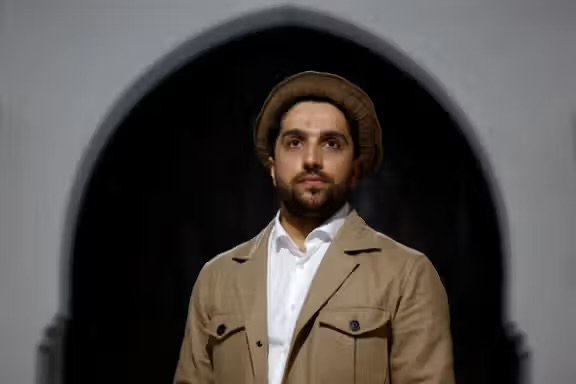
Ahmad Massoud, leader of Afghanistan’s National Resistance Front, has called on what he described as a possible “peace faction” within the Taliban to take the initiative and pursue political dialogue, while warning that the group’s rule cannot continue indefinitely without public legitimacy.
Speaking to Iran-based Eraf television, Massoud said the first messages from Afghanistan’s political and jihadist leaders—including Ahmad Shah Massoud and Burhanuddin Rabbani—were not calls for war but appeals for peace.
He argued, however, that the current balance of power within the Taliban appears to favor factions he described as “war-oriented,” saying they control decision-making and political direction.
Massoud said he has yet to see evidence of a genuine peace-oriented faction within the Taliban and questioned whether such a group actually exists. But he added that if such a faction does exist, it should demonstrate its intentions by accepting the will of the Afghan people and seeking legitimacy from within Afghanistan.
The National Resistance Front leader stressed that he does not consider war a solution to Afghanistan’s problems and said he has repeatedly advocated a political settlement.
According to Massoud, anti-Taliban political and military groups have reached understandings about Afghanistan’s future and are working on a joint roadmap aimed at creating conditions for political legitimacy.
He said the objective of the Taliban’s opponents is not the complete destruction of the group or the seizure of power by a particular individual or faction. Instead, he said, their goal is to establish a legitimate political system whose form is ultimately determined by the Afghan people.
Massoud said that until such a system emerges, anti-Taliban factions will seek to remain united around their shared objectives.
He also called on the Taliban to choose between negotiations and continued confrontation, urging the group to come to the negotiating table and engage in talks aimed at establishing an inclusive government.
Massoud warned that otherwise the Taliban would eventually face what he described as the will and anger of the Afghan people.
He said the opponents of the Taliban want an Afghanistan that is free, prosperous and independent, with a government whose legitimacy derives from the people.
Massoud also rejected the idea that major divisions exist among anti-Taliban factions over their ultimate objective, saying that creating the conditions for Afghans to decide their country’s political future is a common goal.
In another part of the interview, Massoud said the Taliban’s presence in power is not permanent, declaring that “the Taliban are not the end of Afghanistan’s history.”
He concluded by saying that the Taliban would ultimately have to accept the will of the Afghan people or leave power, whether as a result of public pressure or mounting political, regional and international pressure.
The remarks come as Afghanistan remains without an internationally recognized political settlement involving broad-based representation, while the Taliban continue to exercise control over the country and armed opposition groups continue to call for political change.