
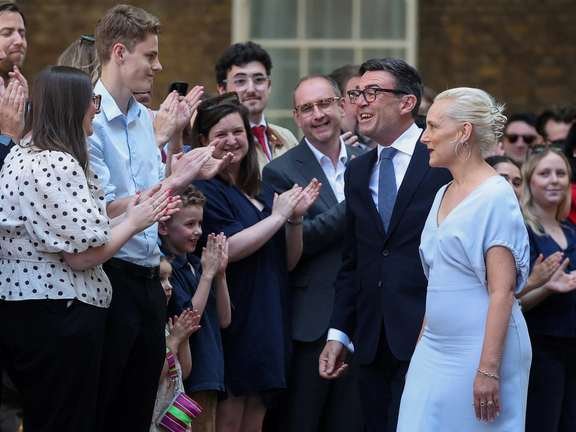
Andy Burnham officially took office as the United Kingdom’s new prime minister on Monday following the resignation of Keir Starmer, promising to end years of political instability and restore confidence in government.
Speaking outside 10 Downing Street in his first address as prime minister, Burnham acknowledged growing public frustration with frequent leadership changes, becoming Britain’s seventh prime minister in the past decade. He pledged to introduce a new model of governance aimed at restoring stability to both politics and the economy.
“I know people are tired of politics. I have heard your message. We have not been good enough, and we must do better,” Burnham said.
The new prime minister announced that his government would introduce immediate measures to ease the cost-of-living crisis while preparing a comprehensive ten-year strategy to reform the economy, modernize public services and improve government performance. He described the programme as a turning point designed to raise living standards, attract investment and rebuild public confidence.
Burnham also identified tackling homelessness as one of his government’s top priorities. He pledged to expand the construction of affordable public housing, reform the welfare system and direct part of the resulting savings toward strengthening Britain’s defence budget.
Before formally taking office, Burnham scrapped one of the previous government’s most controversial policies—the requirement for public sector employees to use a digital identity card—following widespread criticism from opposition parties.
The government is expected to unveil its first cost-of-living support package on Tuesday. Burnham acknowledged that the measures would not solve every economic challenge but said they would demonstrate the government’s commitment to supporting households.
Cabinet formation is now underway, with further ministerial appointments expected in the coming days. Reports suggest significant changes are expected in the government’s economic team following the departure of several senior ministers from the previous administration, including former Chancellor Rachel Reeves.
On foreign policy, Burnham said he held his first telephone conversation with U.S. President Donald Trump and plans to speak with Ukrainian President Volodymyr Zelenskyy in the coming days. He reaffirmed that the United Kingdom’s support for Ukraine would continue.
Burnham assumes office at a time when Britain faces sluggish economic growth, a prolonged cost-of-living crisis, pressure on public services, illegal migration and declining public trust in political institutions. Analysts say the success of his government will largely depend on its ability to deliver economic reforms, restore political stability and contain the growing popularity of Nigel Farage’s right-wing Reform UK party.