
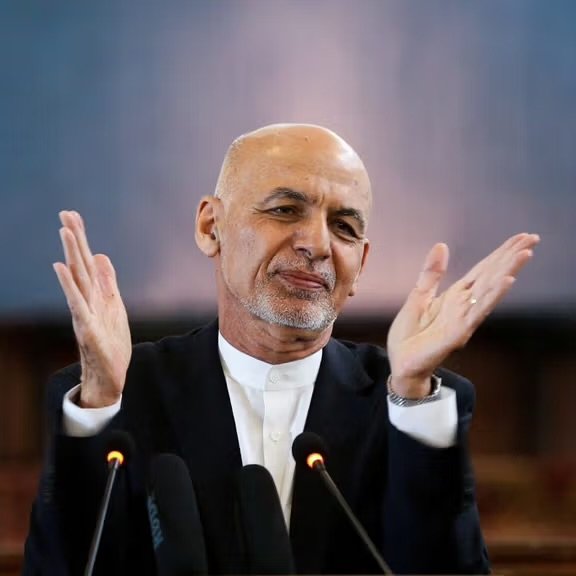
Former Afghan President Ashraf Ghani has warned that Kabul is on track to become the world’s first capital city to run out of water, urging greater attention to Afghanistan’s growing environmental crisis.
Speaking in a podcast on Thursday, Ghani said plans to improve Kabul’s water supply had been prepared during his presidency but were never implemented because, in his view, national interests were not given sufficient priority. Referring to a well-known Persian proverb, he argued that Afghanistan possesses significant water resources but has failed to manage them effectively.
Environmental experts say years of unplanned urban expansion, extensive concrete construction, excessive drilling of deep wells, weak wastewater infrastructure and rapid population growth have placed unprecedented pressure on Kabul’s groundwater reserves.
The International Crisis Group has recently warned that, if current trends continue, Kabul’s groundwater could be exhausted by 2030. Signs of the crisis are already visible across many parts of the city, where groundwater levels have fallen significantly.
Environmental specialist Kazem Homayoun also warned that Kabul has transformed within less than three decades from a city with relatively stable water resources into one of the region’s most water-stressed urban centers.
According to Homayoun, neighborhoods including Dasht-e Barchi, Karte Char, Khwaja Rawash, Taimani, Sherkat, Deh Afghanan, Shahr-e Naw and surrounding areas could face widespread drying of water wells by 2030—or even sooner—if no effective measures are taken.
He added that the groundwater crisis is not limited to Kabul, noting that Herat and Mazar-e-Sharif are also experiencing similar environmental challenges.
The warnings underscore growing concern that Afghanistan’s water crisis is evolving into one of the country’s most urgent environmental and humanitarian challenges, with long-term implications for public health, urban development and economic stability.