
India and the Taliban have agreed to establish a joint working group aimed at expanding cooperation in agriculture and livestock, marking another step in the gradual development of technical and economic ties despite New Delhi’s continued refusal to formally recognize the Taliban government.
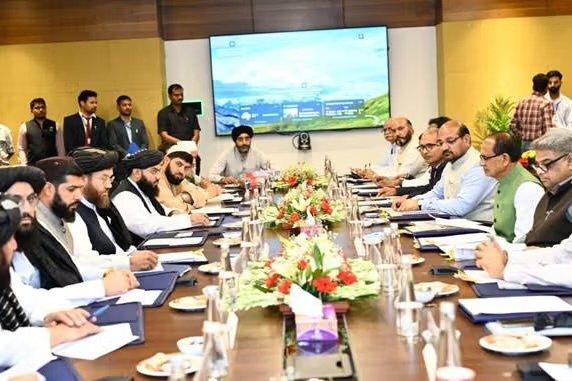
The agreement was reached during talks in New Delhi between India’s Agriculture Minister Shivraj Singh Chouhan and the Taliban’s Acting Minister of Agriculture, Irrigation and Livestock, Ataullah Omari.
According to India’s Ministry of External Affairs, the discussions focused on cooperation in improved seeds, agricultural research, irrigation, capacity building, livestock development and agricultural trade.
The Taliban delegation asked India to support efforts to increase wheat production in Afghanistan by supplying improved seed varieties, sharing technical expertise and expanding research cooperation.
In response, Chouhan said India was prepared to provide high-quality wheat, maize and potato seeds, climate-resilient crop varieties and technical expertise through the Indian Council of Agricultural Research.
The two sides also discussed cooperation in water resource management, irrigation development, water storage and climate adaptation. India said it was ready to share its experience in drip irrigation, rainwater harvesting, small water reservoirs, check dams and efficient water management technologies.
The agreement comes amid a noticeable increase in contacts between Taliban officials and Indian authorities in recent months. Analysts say the growing engagement reflects the Taliban’s efforts to diversify Afghanistan’s foreign relations, particularly as tensions with Pakistan continue. Despite the expanding cooperation, India has maintained that its engagement with the Taliban remains limited to technical and humanitarian cooperation and does not constitute formal diplomatic recognition.