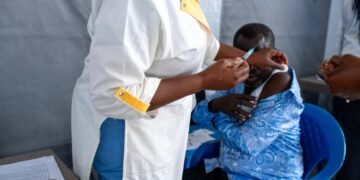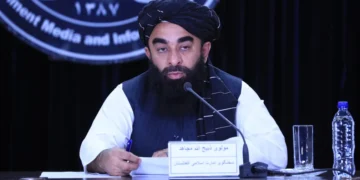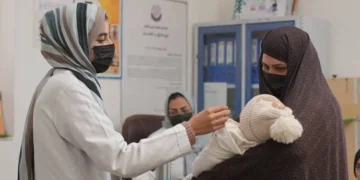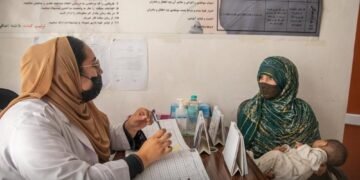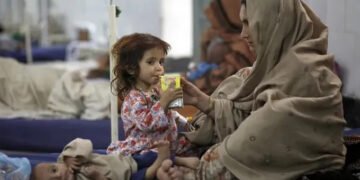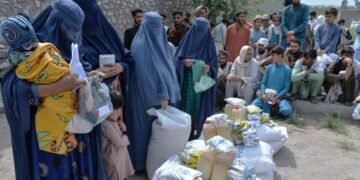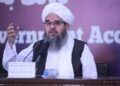

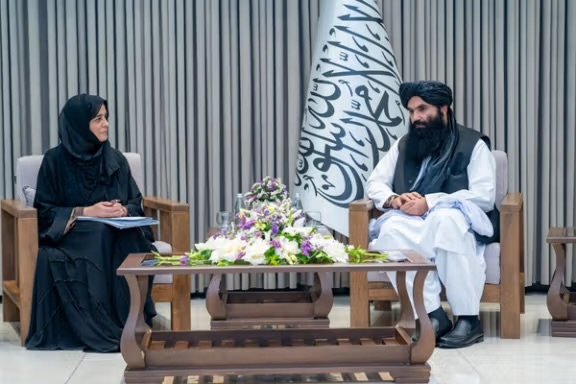
Taliban Interior Minister Sirajuddin Haqqani has acknowledged that years of insecurity disrupted healthcare services in parts of Afghanistan, saying many Afghans continue to face difficulties accessing medical treatment despite changes in the country’s security situation.
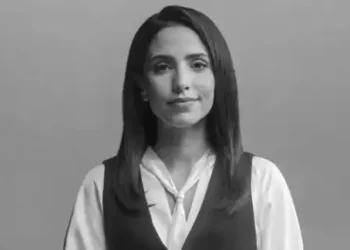
Speaking during a meeting on Sunday with Hanan Balkhy, a senior official of the World Health Organization (WHO), Haqqani said stronger cooperation was needed to improve Afghanistan’s healthcare system and stressed that political considerations should not obstruct the delivery of medical services.
According to a statement issued by the Taliban’s Interior Ministry, the meeting focused on strengthening Afghanistan’s health sector, expanding cooperation with international organizations, improving coordination with humanitarian agencies and supporting nationwide polio vaccination campaigns.
The meeting was also attended by representatives of the King Salman Humanitarian Aid and Relief Centre (KSrelief), UNICEF’s regional office, and the ambassadors of the United Arab Emirates and Qatar.
Haqqani’s remarks come against the backdrop of the Taliban’s own record during the insurgency, when the group repeatedly targeted health facilities or suspended their operations in areas under its influence. In July 2019, the Swedish Committee for Afghanistan reported that the Taliban had closed 42 health clinics in Wardak province. Taliban spokesperson Zabihullah Mujahid later confirmed to Radio Free Afghanistan that the closures had been carried out by the group.
In addition to Taliban actions, years of intense fighting between the insurgents and the former Afghan government also forced many healthcare facilities to close or significantly reduce services, limiting access to medical care for communities across the country.
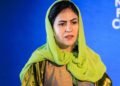
The meeting also highlighted inconsistencies within the Taliban regarding media restrictions. While the Interior Ministry published photographs of Haqqani meeting Hanan Balkhy, Afghanistan’s state broadcaster blurred or omitted Balkhy’s image in its coverage.
Under media restrictions introduced by Taliban leader Hibatullah Akhundzada, the publication of images of living beings, including women, has been discouraged or prohibited across Taliban-controlled media. However, several senior Taliban figures, including Haqqani and Deputy Prime Minister Mullah Abdul Ghani Baradar, have at times appeared to disregard those restrictions by allowing photographs of their official meetings to be released.