
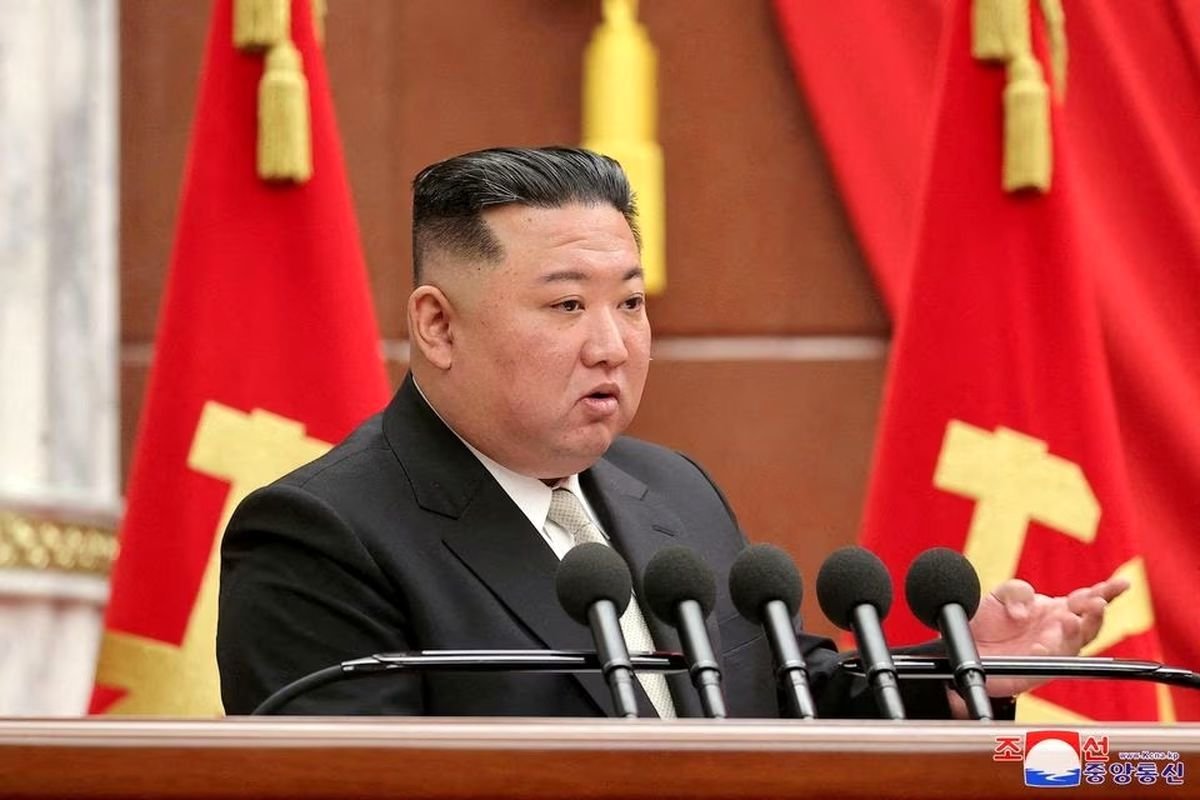
North Korean leader Kim Jong Un has ordered the construction of a 10,000-ton warship and the development of a new generation of underwater weapons, signaling a further escalation in Pyongyang’s efforts to strengthen its military capabilities and strategic deterrence.
According to Al Jazeera, Kim issued the directives during visits to military facilities and while overseeing a naval test, where he emphasized the need to accelerate the modernization of North Korea’s armed forces across multiple domains.
The announcement forms part of a broader military expansion strategy that has increasingly focused on enhancing both conventional and nuclear capabilities as regional tensions continue to rise.
During the inspections, Kim reportedly stressed that North Korea’s navy must possess the ability to respond to potential nuclear threats and conduct advanced operations at sea. He described naval modernization and the development of sophisticated underwater systems as strategic priorities for the country’s defense posture.
The North Korean leader also visited a newly established nuclear materials production facility and called for what state media described as an “exponential” expansion of the country’s nuclear arsenal. According to official reports, Kim argued that the evolving security environment requires continuous growth in North Korea’s deterrence capabilities.
“The security situation demands stronger and more effective deterrent forces,” Kim was quoted as saying during the visit.
The plans highlight Pyongyang’s determination to continue investing heavily in military modernization despite years of international sanctions and diplomatic pressure aimed at curbing its nuclear ambitions.
Analysts say the proposed construction of a 10,000-ton warship would represent a significant step forward for North Korea’s naval capabilities. If completed, such a vessel could substantially increase the operational reach and maritime presence of the country’s navy in regional waters.
The announcement comes after several years of rapid military development in North Korea, including advances in ballistic missile technology, submarine programs, and nuclear weapons production. These activities have repeatedly drawn criticism from the United States, South Korea, Japan, and other Western allies, who view them as destabilizing to regional security.
Pyongyang, however, maintains that its military programs are defensive in nature and necessary to counter what it describes as external threats and hostile military activities near its borders.
The latest developments underscore the increasingly complex security environment in East Asia, where military competition has intensified amid growing geopolitical rivalries. North Korea’s continued pursuit of more advanced naval platforms and expanded nuclear capabilities is likely to deepen concerns among neighboring countries and could trigger further military responses from regional powers.
Beyond the immediate military implications, Kim’s latest directives suggest that North Korea remains committed to strengthening its strategic deterrent regardless of international pressure. As Pyongyang expands both its naval ambitions and nuclear infrastructure, the move is expected to influence regional security calculations, alliance planning, and diplomatic efforts aimed at reducing tensions on the Korean Peninsula.