
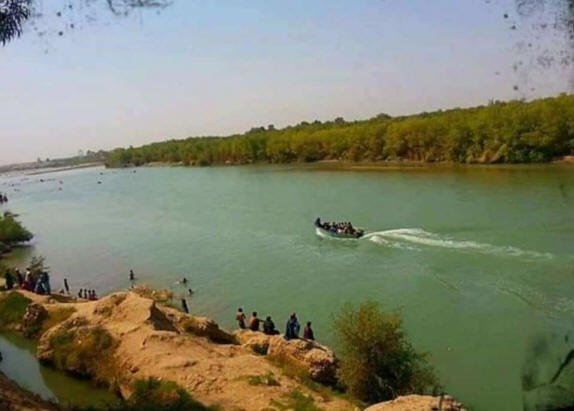
The long-running dispute over the waters of the Helmand River has returned to the spotlight after Iranian media reported a significant increase in water flowing from Afghanistan into Iran’s eastern Sistan and Baluchestan Province.
Fars News reported on Saturday that approximately 417 million cubic meters of water from the Helmand River have entered the province and reached its northern regions in recent months. According to the report, water inflows into the Chah Nimeh reservoirs have doubled between late April and early June compared with previous periods.
Despite the increase, the Iranian outlet claimed that the volume received still represents only about half of the annual water allocation specified for Iran under the Helmand River treaty.
The dispute is rooted in the 1973 Helmand Water Treaty, under which Afghanistan agreed to provide Iran with an annual allocation of 850 million cubic meters of water. The agreement remains the primary legal framework governing water-sharing discussions between the two neighboring countries.
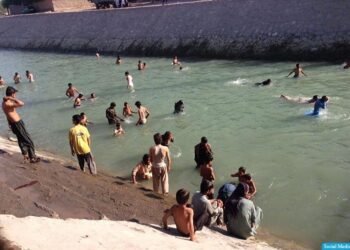
Fars News also stated that Afghanistan has experienced one of its wettest periods in recent years. Heavy rainfall, flooding, and widespread weather-related damage have been reported across several Afghan provinces during recent months, contributing to increased river flows and higher water levels in some areas.
Taliban authorities have not publicly commented on the figures reported by Iranian media or provided updated information regarding the exact volume of water released toward Iran.
The Helmand water issue has become one of the most sensitive subjects in relations between Kabul and Tehran. Iranian officials have repeatedly called for the full implementation of the treaty, while Taliban authorities have argued that water availability depends on climatic conditions, precipitation levels, and reservoir capacity inside Afghanistan.
Beyond the bilateral dispute, water management practices inside Iran have also become part of the broader debate. Iranian experts have repeatedly warned that inefficient agricultural irrigation systems contribute significantly to water losses across the country.
According to figures cited by Iranian agricultural authorities, a large proportion of water used in Iran’s farming sector is lost through outdated irrigation methods before reaching crops. Water governance specialists have argued that improving efficiency could significantly reduce pressure on scarce water resources.
The importance of the Helmand River extends far beyond diplomatic negotiations. For Afghanistan, the river is a critical source of water for agriculture, livelihoods, and economic development. For eastern Iran, particularly the drought-prone Sistan region, it remains an essential lifeline for drinking water, farming, and environmental sustainability.
As climate change, recurring droughts, and growing water demand continue to affect both countries, the management of the Helmand River is becoming increasingly important not only as a diplomatic issue but also as a matter of regional stability and human security. The latest reports of increased water flows may ease some immediate pressures, but they are unlikely to resolve the deeper disagreements that continue to shape one of the most complex cross-border water disputes in the region.