
The Taliban’s Ministry for the Promotion of Virtue and Prevention of Vice in Herat has reportedly issued a new directive requiring male family members to prevent women from appearing in public without clothing approved by the Taliban, while warning that women who violate the rules could face detention.
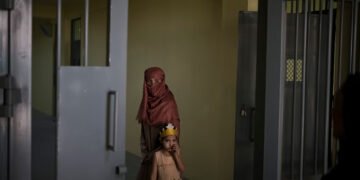
According to a copy of the directive obtained by media outlets, women seen in public without what Taliban authorities describe as proper Islamic covering, including a prayer chador, with their faces uncovered, wearing tight clothing, or using makeup, could be detained by morality officers and transferred to a women’s detention facility.
The order reportedly goes beyond previous restrictions by formally assigning responsibility to male relatives. Men have been instructed to ensure that female members of their families comply with the dress requirements established by Taliban authorities.
At the same time, an audio recording attributed to officials from the Taliban’s morality police in Herat has circulated on social media. In the recording, the measure is described as the outcome of discussions among local Taliban authorities and is reportedly scheduled to take effect on Saturday.
According to the audio message, neighborhood representatives and mosque imams have been instructed to inform residents throughout Herat city and surrounding districts about the new regulations.
The development comes amid reports that Taliban morality officers have increased enforcement activities across Herat in recent weeks. Local residents say multiple checkpoints have been established where women and families are questioned about clothing and appearance.
Residents report that private vehicles and taxis have also been stopped and inspected in several parts of the city, including Shahr-e Naw, 29 Haml Square, Bakrabad, and the Leilami Road area.
Since returning to power in 2021, the Taliban have introduced a series of restrictions affecting women’s access to education, employment, travel, and participation in public life. Taliban officials have consistently defended such measures as part of their interpretation of Islamic law.
Human rights organizations, however, have repeatedly argued that the restrictions imposed on Afghan women represent one of the most severe rollbacks of women’s rights in the world. International rights groups say the cumulative effect of these policies has significantly reduced women’s participation in public and social life.
What makes the reported Herat directive particularly significant is not only the stricter enforcement of dress requirements but the apparent transfer of responsibility from individuals to entire families. By placing accountability on male relatives, the policy expands enforcement beyond public spaces and into the private sphere of family life.
The move is likely to deepen concerns among rights advocates who argue that increasing restrictions on women continue to widen Afghanistan’s divide with the international community. While Taliban authorities present the measures as religious obligations, critics warn that expanding family-based enforcement mechanisms could increase social pressure on women, further restrict personal freedoms, and intensify scrutiny of daily life. The reported directive signals that, rather than easing restrictions, Taliban authorities may be moving toward broader and more systematic enforcement of regulations governing women’s presence in public spaces.