
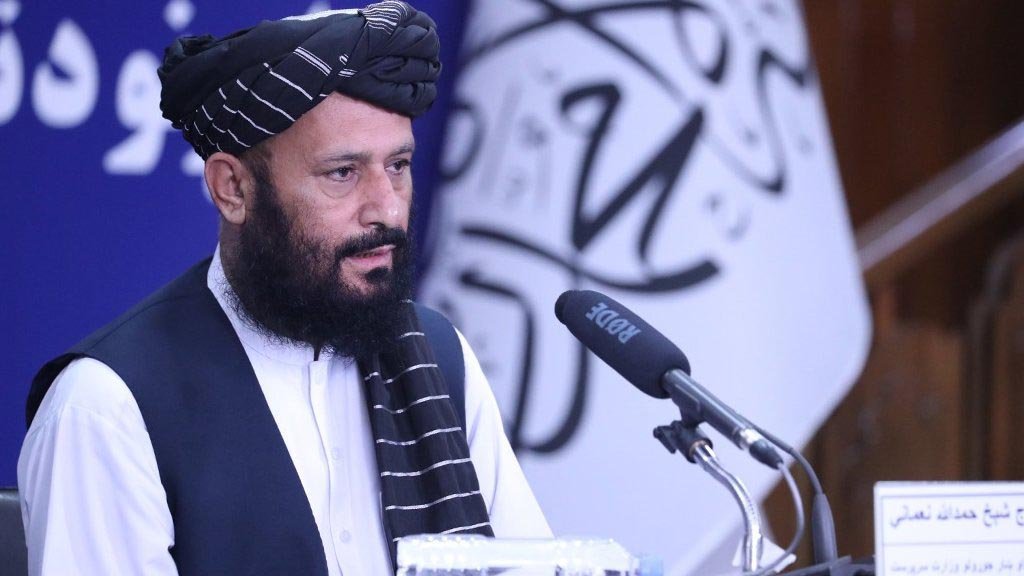
Taliban spokesperson Zabihullah Mujahid has announced a new round of administrative appointments and reassignments ordered by the group’s supreme leader, Hibatullah Akhundzada.
According to the announcement, Hamdullah Nomani has been removed as Minister of Communications and Information Technology, with a former Taliban governor of Faryab appointed to replace him. Nomani had been transferred to the role around ten months ago from the Ministry of Urban Development.
During his tenure, a nationwide shutdown of internet and telecommunications services for 48 hours was among the most controversial developments.
The reshuffle also includes the swapping of governors between Khost and Baghlan, as well as the appointment of a new governor in Farah, replacing the former governor of Badghis. A new official has also been assigned to lead Badghis province.
Such changes come amid ongoing debate over governance practices within the Taliban administration, where appointments are often viewed as being shaped more by internal loyalty, group dynamics, and political considerations than by technical expertise or professional background.
While such an approach may reinforce internal cohesion in the short term, analysts suggest it could affect long-term administrative efficiency, public service delivery, and management of specialized sectors such as communications and the economy.
The continuation of this pattern indicates that governance structures remain closely tied to internal political logic rather than institutionalized professional standards.