
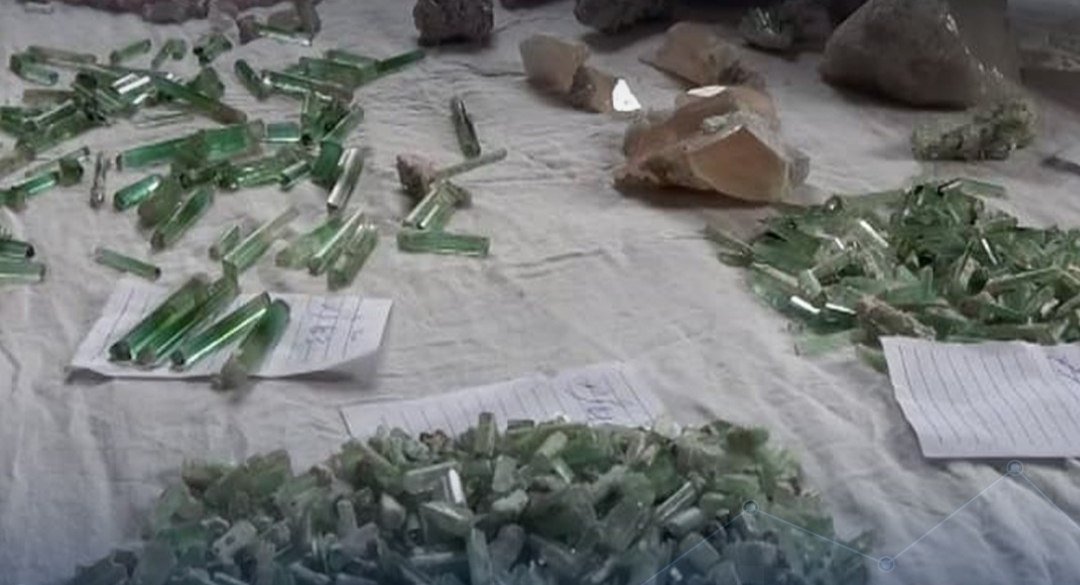
Officials from the Nuristan Directorate of Mines and Petroleum have announced that precious stones extracted from mines in the Doab district were sold through an open bidding process for 52.62 million Afghanis.
According to local authorities, the stones included beryl, kunzite, and morganite mined from the district’s deposits.
Officials said the sale was conducted through a public auction process involving domestic traders.
Authorities added that 5.226 million Afghanis from the transaction were deposited into the state treasury.
Nuristan is considered one of Afghanistan’s resource-rich provinces with significant reserves of precious and semi-precious stones, attracting growing interest from both domestic and foreign traders in recent years.
Since returning to power, the Taliban have increasingly sought to turn Afghanistan’s mining sector into one of the government’s primary revenue sources.
However, experts have repeatedly raised concerns over the lack of transparency, weak oversight, and the risk of illegal extraction in Afghanistan’s mining industry.
Economic analysts say that if managed transparently and professionally, Afghanistan’s mineral resources could play an important role in economic growth and job creation.
At the same time, specialists warn that without independent monitoring and accountable management systems, the mining sector could remain vulnerable to corruption, smuggling, and the concentration of revenues within limited power structures.
Observers note that the growing dependence on mining income reflects broader efforts by the Taliban administration to compensate for declining foreign aid and ongoing economic challenges.