
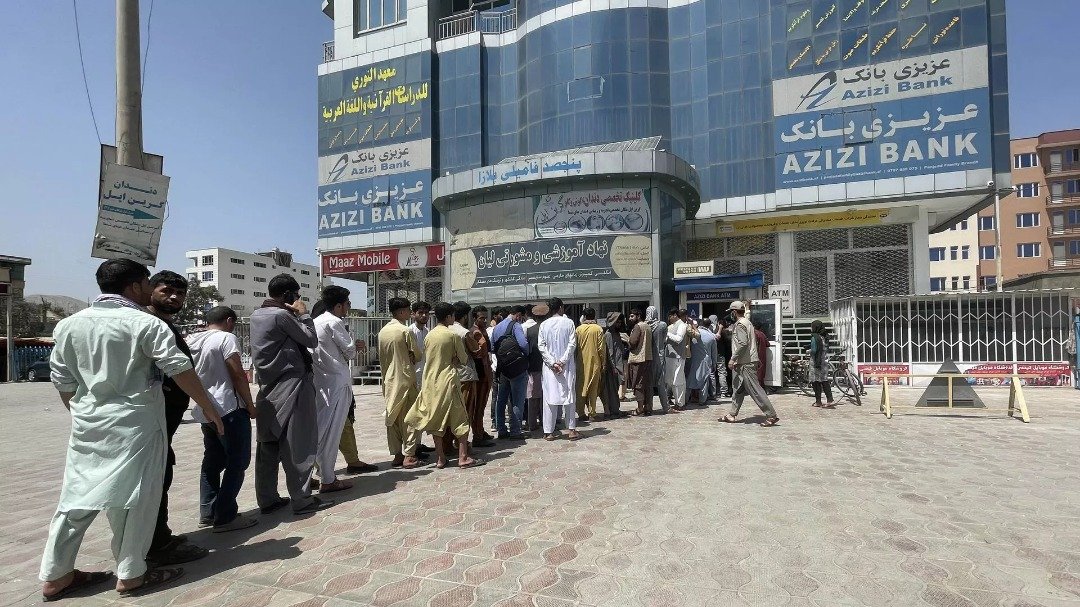
A number of customers at private banks in Kabul say banks have limited cash withdrawals to 20,000 Afghanis, while many clients reportedly wait for hours to receive even that amount.
Three Kabul residents told Afghanistan International on Tuesday that, in addition to limiting withdrawals, some banks dismiss customers by citing “system disruptions” when branches become overcrowded.
One customer of Azizi Bank said money had been transferred to him from abroad, but the bank refused to release the full amount and only provided 20,000 Afghanis.
He said the funds had been sent to help his family purchase supplies and livestock for Eid, but the amount released was insufficient to cover holiday expenses.
According to customers, some banks are also refusing to pay the full value of remittances sent from abroad.
Private banks in Kabul and Afghanistan’s central bank have not yet provided an official explanation for the reported restrictions.
However, complaints regarding liquidity shortages and withdrawal limits have surfaced repeatedly in recent months.
An employee at a private bank, speaking on condition of anonymity, said funds transferred from abroad are not immediately converted into cash and that banks must complete settlement and liquidity management procedures.
The employee described the situation as temporary and said the issue would likely be resolved soon.
Afghanistan’s banking system has faced severe liquidity shortages and operational restrictions since the collapse of the previous government and the Taliban’s return to power in 2021.
The freezing of Afghanistan’s foreign reserves, the suspension of large-scale international assistance, and the country’s reduced access to the global financial system are considered major causes of the ongoing crisis.
This comes despite an announcement last year by Afghanistan’s Taliban-controlled central bank that monthly withdrawal limits for personal Afghani accounts had been increased to one million Afghanis and dollar accounts to $15,000.
Economic analysts say continued withdrawal restrictions risk weakening public confidence in the banking sector and could place additional financial pressure on Afghan households already struggling with economic hardship.
Experts also warn that prolonged distrust in the banking system can accelerate cash hoarding, reduce financial circulation, and deepen structural instability in Afghanistan’s fragile economy.