

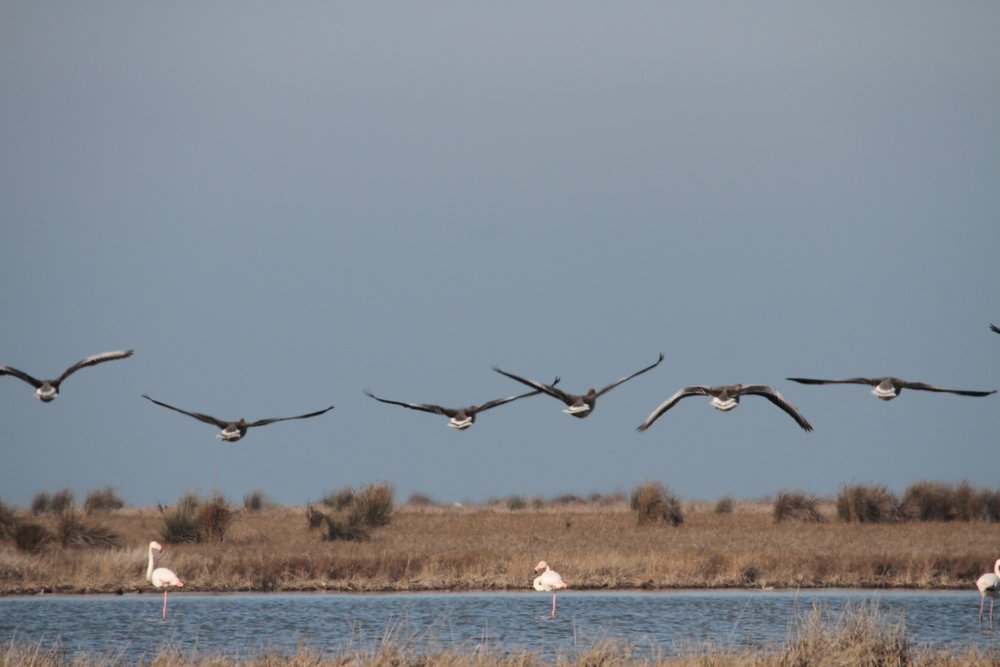
The Afghanistan Analysts Network says Rewild, a newly established environmental organization, has conducted the country’s first waterbird census since the collapse of the former republic.
According to the report, volunteers from Rewild surveyed six wetland areas in early 2026 as part of the International Waterbird Census, a global conservation initiative running since 1967 and involving 189 countries.
The four-member Afghan team, including local ornithologists, visited wetlands and reservoirs in Takhar, Ghazni, Kabul, Nangarhar, and other provinces.
Among the surveyed sites, Bande Sarda in Ghazni was identified as the most important habitat for waterbirds, with 45 bird species recorded there.
Researchers observed nearly 300 green-winged teal ducks, more than 600 common ducks, and around 2,000 Eurasian coots in the area.
The survey also documented 19 species in Surobi Dam, 15 species in Darunta Dam, and 12 species in Naghlu Dam.
However, the report warns that pollution, hunting, fishing with nets, declining water levels, and expanding agricultural land are causing severe damage to bird habitats.
In Ab-i-Estada, Ghazni—once considered one of the region’s most important stopover sites for migratory birds and flamingos—the team found no water at all and recorded only a few larks on the dried lakebed.
Ayub Alavi, head of Rewild, said conditions for birds and wetlands are “not good” compared with previous reports and warned that migratory bird populations are under severe pressure.
The report identifies hunting, drought, climate change, groundwater extraction, pollution, and agricultural expansion as major threats to Afghanistan’s wetlands and migratory birds.
It also notes that some migratory birds are increasingly avoiding traditional stopover areas such as the Shomali Plain because of growing hunting and trapping activities.
Following the survey, Rewild and Afghanistan’s National Environmental Protection Agency launched a joint initiative aimed at protecting migratory birds and reducing illegal hunting and wildlife trade.
Environmental experts say the findings reflect broader ecological stress across Afghanistan, where climate change, water scarcity, and weak environmental protections are accelerating the degradation of fragile ecosystems.