

Saudi Arabia’s Grand Mufti, Sheikh Saleh bin Fawzan Al-Fawzan, has called on the kingdom’s soldiers to be prepared to sacrifice their lives defending the country as attacks by Yemen’s Iran-aligned Houthi movement intensify.
In a statement addressed to Saudi troops stationed along the Yemeni border, Al-Fawzan described defending Saudi territory and confronting anyone seeking to violate the kingdom’s borders as among the highest religious duties. He urged soldiers to remain fully prepared, obey their commanders and carry out orders while defending the country and its holy sites.
The statement comes amid a sharp escalation in fighting between Saudi Arabia and the Houthis. In recent weeks, Houthi forces have launched missile and drone attacks against Saudi territory, while Saudi and allied forces have responded with airstrikes against Houthi positions.
Saudi authorities said a ballistic missile launched toward Riyadh on September 19 was intercepted. Saudi officials have also reported attempted Houthi attacks on other cities, including Taif, Yanbu, Baish and Farasan. The recent attacks have included strikes or attempted strikes against civilian and energy infrastructure, according to Saudi authorities.
The escalation has also expanded around Yemen’s Red Sea coastline. Reuters has reported that Houthi forces reached Dhubab, near the strategic Bab el-Mandeb Strait, while other reporting has described a broader Houthi advance along parts of the Red Sea coast.
Bab el-Mandeb is one of the world’s critical maritime chokepoints, linking the Red Sea with the Gulf of Aden and providing a major route for international commercial shipping. Any prolonged disruption in the area could therefore have consequences extending beyond Yemen and Saudi Arabia, particularly for maritime trade and energy transportation.
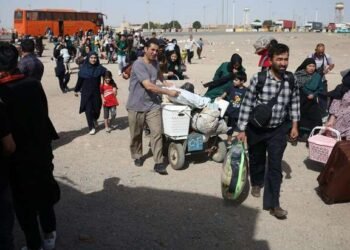
The renewed fighting marks a significant deterioration after years in which the intensity of the Yemen war had fallen following the UN-mediated truce of 2022. The latest escalation has already displaced tens of thousands of people inside Yemen and increased pressure on regional governments concerned about the security of major maritime routes.
Al-Fawzan also called for a complete victory over the Houthis and their supporters, framing the military confrontation as a defense of Saudi territory and the kingdom’s holy sites.
The Saudi government has separately accused the Houthis of attempting to target Mecca. Saudi authorities said on September 15 that air defenses intercepted a drone before it entered the restricted airspace around the holy city. The Houthis’ intentions and responsibility for specific incidents remain matters that should be distinguished from Saudi official claims.
The latest escalation has also drawn wider regional attention. Foreign ministers from Saudi Arabia, Türkiye, Egypt and Pakistan recently affirmed Riyadh’s right to defend itself while emphasizing the importance of protecting navigation and pursuing diplomacy. The G7 has likewise called on Iran to stop arming and supporting the Houthis and urged the group to halt attacks and return to the political process.
Houthi political leader Mahdi al-Mashat has meanwhile said the group has moved from making demands to taking direct action against Saudi Arabia, describing its approach as “siege for siege, escalation for escalation.”
The significance of Al-Fawzan’s message therefore extends beyond a religious statement. It comes at a moment when the conflict is again combining military escalation, regional power competition and threats to one of the world’s most important maritime corridors.
For Saudi Arabia, the immediate challenge is defending its territory and critical infrastructure while preventing the confrontation from expanding further. For Yemen and the wider region, the renewed fighting raises the prospect of another prolonged cycle of military escalation at a time when the country has yet to achieve a durable political settlement.