
Qatar is calling on members of the Organization of Islamic Cooperation to maintain support for the Doha Process on Afghanistan and keep the country high on the international agenda as humanitarian and development challenges continue.
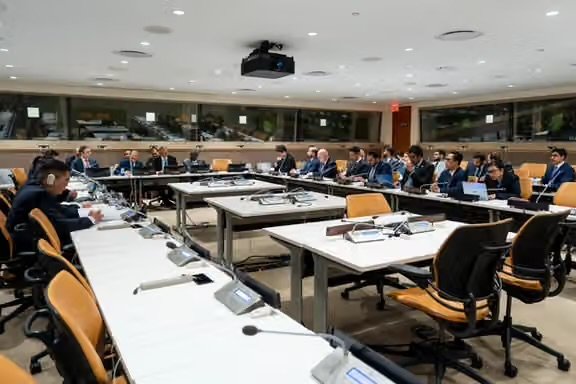
Mohammed bin Abdulaziz Al Khulaifi, Qatar’s Minister of State at the Ministry of Foreign Affairs, made the appeal on September 22 during a meeting of the OIC Ministerial Contact Group on Afghanistan on the sidelines of the 81st United Nations General Assembly in New York.
Al Khulaifi said the challenges facing the Afghan people require intensified diplomatic efforts, broader cooperation and continued international support. He called on OIC members to coordinate their efforts, encourage genuine dialogue and maintain assistance to Afghanistan.
“At a time when the Afghan people are enduring extremely difficult circumstances, OIC members have a responsibility to work in harmony, encourage genuine dialogue and continue providing support,” Al Khulaifi said.
Qatar also emphasized its long-standing role in the Doha Process. According to the Qatari foreign ministry, Doha has supported peaceful solutions based on dialogue and preventive diplomacy since the process began in 2013, while hosting multiple rounds of talks involving Afghan parties.
Al Khulaifi said Qatar remains prepared to host the fourth meeting of special envoys as part of the UN-led Doha Process. He also referred to recent meetings of working groups focused on counter-narcotics and the private sector.
He argued that continued international backing is needed to preserve the momentum of the process and ensure that Afghanistan remains high on the international agenda, in line with UN Security Council Resolution 2721.
Qatar says its engagement extends beyond diplomacy. Through Qatari development and humanitarian organizations, the country has supported projects across Afghanistan, including initiatives focused on education and employment for women, girls and young people.
Al Khulaifi also expressed Qatar’s readiness to work with other OIC member states to address urgent humanitarian needs and encourage constructive engagement between the Taliban authorities and the international community.
The OIC Contact Group meeting itself reaffirmed the organization’s commitment to supporting the Afghan people. OIC Secretary-General Ismail Ould Cheikh Ahmed said the organization supports communication and practical cooperation with Afghanistan’s de facto authorities in ways intended to serve the Afghan people and sustain humanitarian work. The OIC also highlighted its activities in areas including girls’ education, health and social cohesion.
Qatar’s position reflects the complex diplomatic role it has played on Afghanistan. Doha has not formally recognized the Taliban government, while simultaneously serving as one of the principal channels of communication between Taliban authorities and the international community.
That dual role places Qatar at the center of a difficult diplomatic balance: maintaining dialogue with the Taliban while keeping humanitarian needs, women’s and girls’ rights and other international concerns on the agenda.
For Afghanistan, the significance of the latest discussions is therefore not limited to Qatar’s offer to continue hosting diplomatic meetings. The larger question is whether sustained engagement can produce practical progress while preventing the country’s humanitarian and political challenges from receiving less international attention.
Qatar’s message in New York was that diplomatic engagement should continue, but the international focus on Afghanistan should not come at the expense of humanitarian needs or the issues that remain central to international concerns about the country.