
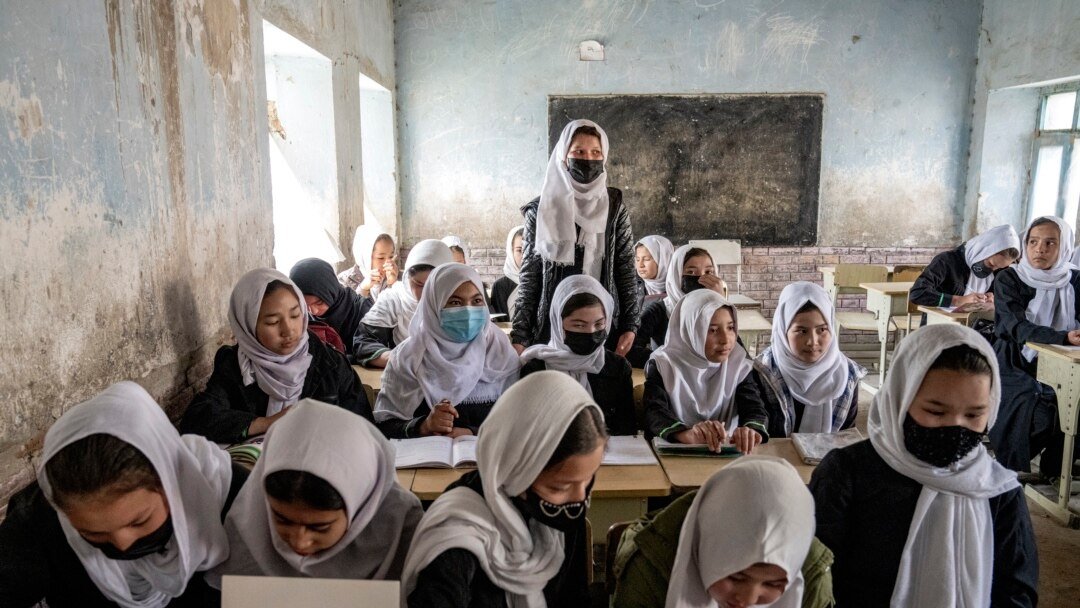
Five years after girls above sixth grade were barred from formal education in Afghanistan, UNICEF is again calling on the Taliban to lift all restrictions on girls’ and women’s education, warning that more than 2.6 million girls have now been denied access to secondary education.
In a statement marking five years since the restrictions began, UNICEF said Afghanistan remains the only country in the world where secondary and higher education is effectively closed to girls and women. Girls have been excluded from formal education beyond grade six since September 2021, while women have been barred from universities since December 2022. oai_citation:0‡UNICEF
UNICEF Executive Director Catherine Russell said five years may be a short period in the history of a country but represents a defining part of a girl’s life. She stressed that education provides more than academic learning, including opportunities for young people to develop their potential and protection against risks such as child labour, early marriage, violence and abuse. oai_citation:1‡UNICEF
The consequences are also extending beyond the classroom. UNICEF estimates that restrictions on girls’ education and women’s participation in the labour force are costing Afghanistan at least US$84 million in lost economic output each year. The agency has warned that continued restrictions could also weaken the country’s future pool of female teachers and health workers. oai_citation:2‡UNICEF
For Afghan families, the issue is therefore not limited to whether a girl can attend school this year. Every additional year outside the education system reduces the time available for girls to acquire qualifications needed for higher education, professional employment and participation in essential services.
The restrictions have also become part of a broader system of limitations affecting women and girls under Taliban rule. International organizations and rights groups have repeatedly called for these measures to be reversed. Amnesty International, marking five years since the Taliban takeover, has continued to document restrictions affecting women and girls and called for international solidarity and action. oai_citation:3‡Amnesty International
The Taliban have defended restrictions on women and girls through their stated interpretation of Islamic law and Afghan cultural norms. International organizations, however, continue to call for the reopening of schools and universities to female students.
UNICEF says the authorities should allow all girls and women to return to educational institutions immediately and without conditions, and has said it is prepared to support the safe reopening of schools. oai_citation:4‡UNICEF
For Afghanistan, the continuing education ban has consequences that extend well beyond a single generation of students. The longer girls remain outside secondary and higher education, the greater the risk that the country will lose future teachers, health professionals and other skilled workers. UNICEF’s economic analysis warns that these losses accumulate each year the restrictions remain in place. oai_citation:5‡UNICEF
Five years after the restrictions began, the central question remains unresolved: whether Afghanistan’s girls will be allowed to return to the education system from which they have been excluded. The repeated appeals from UNICEF and other international organizations have so far not produced a reopening of secondary schools and universities for girls and women.