
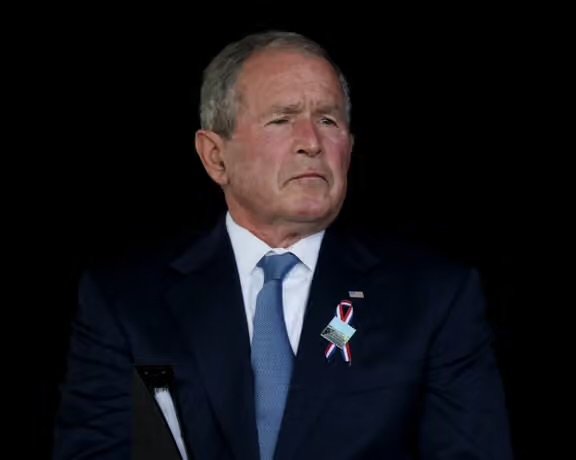
Former US President George W. Bush has expressed regret over the continued exclusion of Afghan women and girls from education and employment, saying women who gained greater opportunities to study and build professional careers in previous years are now unable to fully develop their potential.
Bush made the remarks Wednesday night at an event marking the 25th anniversary of the September 11 attacks at his presidential center in Dallas.
Bush said the experience of Afghanistan demonstrated that people everywhere want freedom. He rejected the idea that Afghans do not want freedom or cannot distinguish between freedom and authoritarian rule.
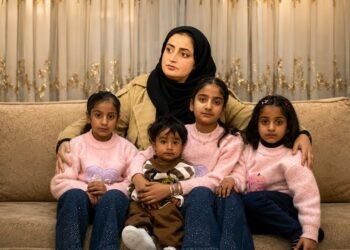
He pointed to girls who had entered school for the first time and women who had become doctors and university professors, saying they understood the difference between a free society and an authoritarian one.
“Unfortunately, those women who were just beginning to realize their full capabilities no longer have the opportunity to develop all of their talents,” Bush said.
The comments come as the Taliban continue to enforce sweeping restrictions on women and girls in Afghanistan, including restrictions on education and employment. The measures have sharply narrowed women’s opportunities to study, work and participate in public life.
Bush also reflected on the September 11, 2001 attacks, saying they transformed the course of his presidency only eight months after he took office and made him a “wartime president.”
On September 11, hijacked planes struck the World Trade Center towers in New York and the Pentagon in Virginia. A fourth plane crashed in Pennsylvania after passengers and crew attempted to resist the hijackers. Nearly 3,000 people were killed.
Bush recalled being at an elementary school in Florida when he learned of the second plane hitting the World Trade Center and realized the attacks were not an ordinary accident.
He said the organized threat posed by al-Qaeda from Afghanistan, then under Taliban control, meant the US response could not be limited to policing measures.
After the attacks, Washington demanded that the Taliban hand over al-Qaeda leaders, including Osama bin Laden. After the demand was rejected, the United States and its allies launched airstrikes against Taliban and al-Qaeda targets in Afghanistan on October 7, 2001.
The intervention began a war that lasted nearly two decades. US and allied forces removed the Taliban from power in the opening weeks, but the conflict continued as the Taliban waged an armed insurgency against Afghan and foreign forces.
Twenty-five years after September 11, Bush’s comments underscore how the legacy of the US war in Afghanistan remains closely connected to the question of women’s rights. For Afghan women who gained expanded access to education and professional life during the republic, the return of Taliban restrictions has reversed many of those opportunities.
The broader consequence extends beyond individual freedoms: limiting women’s education and participation in the workforce also affects Afghanistan’s future pool of professionals, human capital and social development. Bush’s remarks therefore place the current restrictions within a much larger question about what happened to the opportunities created for an entire generation of Afghan women and girls.