

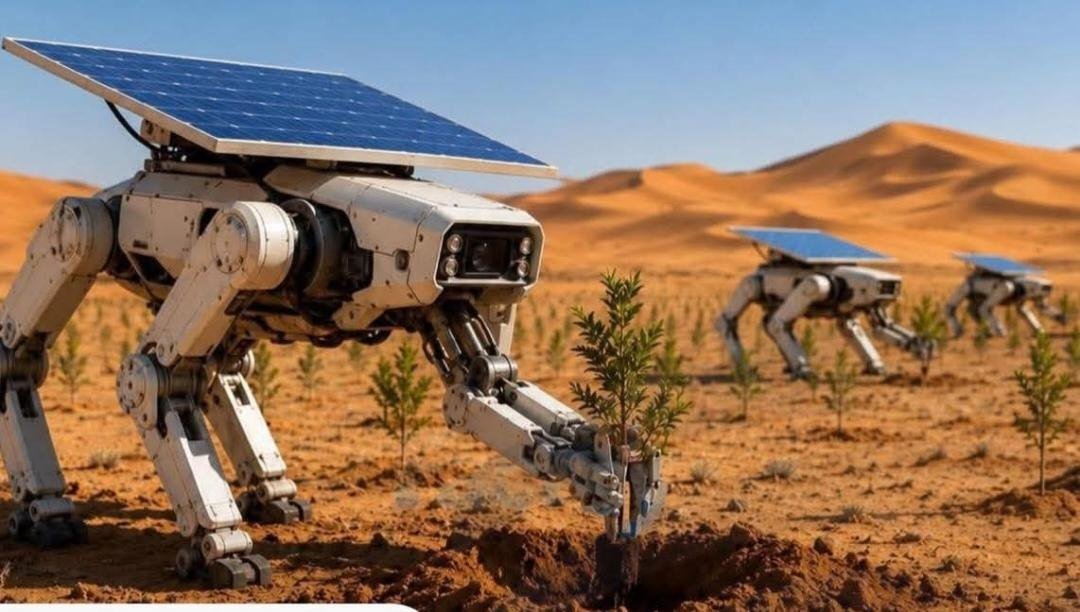
China has introduced a new generation of autonomous solar-powered robots as part of its latest efforts to combat desertification and restore degraded land in the country’s northern regions.
Equipped with artificial intelligence, GPS technology and advanced environmental sensors, the robots are designed to analyze soil conditions and identify the most suitable locations for planting vegetation.
After collecting and processing data, the machines can independently perform several tasks, including drilling into the soil, planting seedlings and providing initial irrigation. The entire process can be carried out with minimal direct human involvement.
Chinese authorities and researchers say the technology is intended to accelerate reforestation and land restoration projects while reducing labor costs and improving planting efficiency in remote and challenging environments.
Desertification has long been one of China’s major environmental challenges, particularly in northern and northwestern regions where expanding deserts, soil degradation and climate pressures have threatened agriculture, ecosystems and local communities.
In recent years, China has invested heavily in green technologies, large-scale tree-planting initiatives and environmental restoration programs aimed at slowing the spread of deserts and improving ecological resilience.
Environmental experts believe that combining artificial intelligence with renewable energy could significantly improve the effectiveness of future conservation projects. Autonomous systems are increasingly being viewed as valuable tools for monitoring environmental conditions, restoring damaged ecosystems and addressing the long-term effects of climate change.
Supporters of the technology argue that robotic planting systems can operate in difficult terrain, work continuously for extended periods and collect valuable environmental data that can improve future restoration efforts.
As countries around the world search for innovative solutions to environmental challenges, China’s use of intelligent solar-powered robots highlights the growing role of advanced technology in protecting natural resources and supporting sustainable development.
The project also reflects a broader global trend toward integrating artificial intelligence, automation and renewable energy into environmental management and climate adaptation strategies.