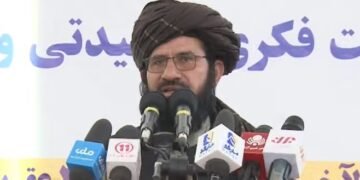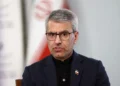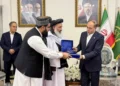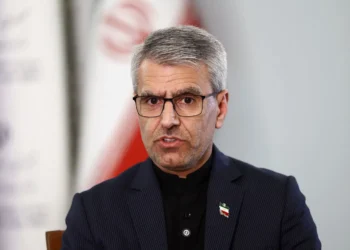


Abdul Haq Wasiq, head of the Taliban’s intelligence agency, has urged major technology companies, including Telegram and TikTok, to cooperate with the Taliban in countering ISIS-K, claiming the group uses social media and digital technologies for communication, fundraising and ideological propaganda.
Wasiq made the remarks at the first Shanghai Cooperation Organisation Plus expert dialogue on security issues, held in Samarkand, Uzbekistan. He also warned that ISIS-K could use artificial intelligence to learn methods for producing toxic substances and lethal weapons, potentially bypassing restrictions placed on such technologies.
The Taliban intelligence chief said his administration was on the front line of the fight against ISIS-K but faced serious limitations in countering the group’s technical capabilities. He alleged that major technology companies had not cooperated with the Taliban despite the group’s use of their platforms.
The meeting took place on 5 and 6 November, bringing together 33 delegations from 24 countries and five international organisations. Counterterrorism, extremism, the security implications of emerging technologies and the potential misuse of artificial intelligence by extremist groups were among the main topics discussed.
Alexander Zuev, the United Nations Deputy Secretary-General for Counter-Terrorism, also warned about the growing technical capabilities of ISIS-K. He said the group had acquired modern tactical equipment, including drones, and that its members had received training to operate such devices.
ISIS-K is an armed extremist group active in Afghanistan and the wider region. It uses social media and digital communication tools for propaganda, recruitment and coordination, while its activities and affiliated networks beyond Afghanistan have raised security concerns in several countries.
Wasiq’s appeal comes despite repeated Taliban claims that ISIS-K has been severely suppressed inside Afghanistan. His request for cooperation from international technology companies points to continuing concerns about the group’s online activities and the Taliban’s ability to counter them.
The remarks also raise questions about the Taliban’s approach to international security cooperation. Seeking assistance from global technology companies does not, by itself, establish that those companies will work directly with the Taliban or that such cooperation would be possible under their policies and legal obligations. The challenge of countering ISIS-K’s digital networks therefore remains part of a wider regional security problem, involving both technological capabilities and cross-border coordination.