

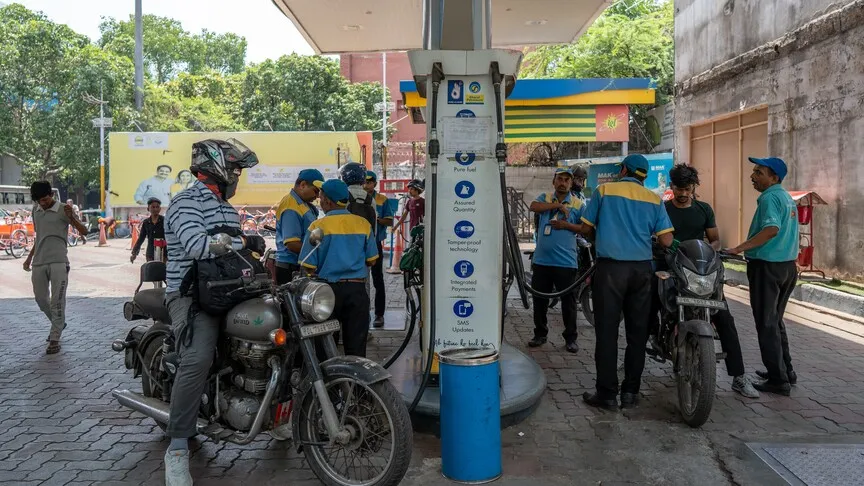
India’s latest fuel price increase has triggered fresh political criticism, with opposition parties warning that rising energy costs are placing growing economic pressure on ordinary citizens.
The Indian government raised fuel prices for the second time within a week, prompting strong reactions from opposition groups led by the Indian National Congress.
Mallikarjun Kharge, president of the Congress Party, said the decision would impose another financial burden on households already struggling with rising living costs.
The government, however, defended the increase, saying higher prices were necessary to offset growing global fuel costs.
According to local reports, the latest increase was less than one rupee per liter, but concerns continue to grow over the possibility of further increases and their impact on inflation.
Economic analysts say recent tensions in the Middle East — including conflict involving the United States, Israel, and Iran — have added new pressure to global energy markets.
Analysts also point to disruptions in shipping traffic through the Strait of Hormuz, a critical route for global oil transport, as a major factor driving uncertainty in fuel supplies and pricing.
In recent days, reports of protests and unrest have also emerged in several African countries heavily dependent on fuel imports from Gulf states, where rising energy costs are beginning to affect transportation and daily living expenses.
Experts warn that continued increases in fuel prices could trigger a broader wave of inflation across energy-importing economies and place additional strain on household finances worldwide.