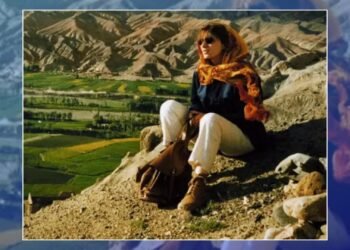


Afghan filmmaker Shahrbanoo Sadat has criticised structural discrimination against women in the film industry, saying gender inequality begins at the earliest stages of project development and funding.
Speaking at the Tokyo International Film Festival during a discussion on the future of women’s cinema, Sadat identified limited funding opportunities and a lack of awareness among financing institutions as major obstacles facing women filmmakers.
Reflecting on the barriers to filmmaking in Afghanistan, Sadat described what she called a cultural mafia dominated by older men, arguing that women are effectively excluded from influential networks and opportunities. She said female filmmakers often face pressure to compromise in order to access opportunities and benefits available more readily to their male counterparts.
Now based in Germany, Sadat said she had turned to the European film industry to continue her professional career. However, she stressed that discrimination also exists within Europe’s film financing system.
“Filmmaking in Afghanistan is a crime. In Europe, the situation is not that severe, but the discrimination is fundamental and embedded in the system,” she said.
Sadat also criticised the limited representation of women in the main competition at the Venice Film Festival, where she served on this year’s jury. According to her, only one of the 20 competing films was directed by a woman. That film, The Voice of Hind Rajab—no, the award-winning film was The Last One for the Road—
Sadat argued that some films directed by men were selected despite what she considered shortcomings in their quality, while films made by women faced more demanding standards. She summarised the double standard by saying that women directors are not allowed to make bad films, and called for equal opportunities for women to experiment, take risks and make mistakes as part of their professional development.
Her latest film, No Good Men, opened the 76th Berlin International Film Festival before being screened at the Tokyo International Film Festival.
Turning to Afghanistan, Sadat said the consequences of war and the daily struggle for survival have left many people focused on getting through the present rather than imagining the future. Nevertheless, she argued that change can begin with small actions and requires time and a gradual, sustained process.
Her remarks highlight a wider challenge facing women in cinema: formal access to the industry does not necessarily translate into equal access to funding, professional networks, festival selections or the freedom to take creative risks. Without changes to those structures, greater visibility for women may remain limited and uneven.