
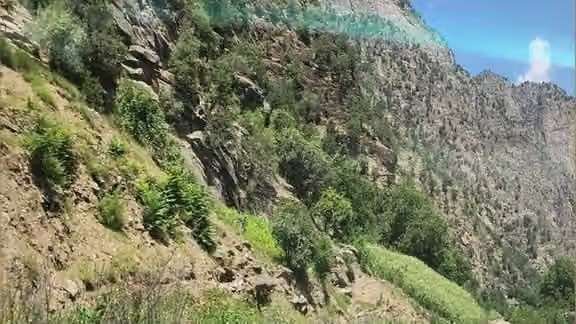
Several days of fighting between the Taliban and the Afghanistan Freedom Front in Kamdesh district of Nuristan have produced sharply conflicting claims over casualties, detainees and control of parts of the mountainous eastern province.
Mohammad Hassan Saqib, a Taliban police spokesman in Nuristan, told a Taliban-linked radio outlet on Monday that 38 opposition fighters had been killed and 60 others detained during three days of clashes in Kamdesh.
Saqib said some of those detained had been wounded during the fighting, while others had surrendered to Taliban forces. He also said what the Taliban described as a “clearing operation” was continuing in the district.
The Afghanistan Freedom Front has presented a substantially different account.
The group said on Sunday that 37 Taliban members had been killed and another 24 wounded in fighting in Kamdesh and neighboring Nari district in Kunar province.
The front also claimed that its forces had launched a counteroffensive, seized several Taliban checkpoints and taken control of parts of Kamdesh and Nari. It further claimed that weapons and military equipment had been captured.
The Taliban had previously released different figures concerning the same clashes. Its Defense Ministry said 28 opposition fighters had been killed and 32 detained, while alleging that the fighters had entered Afghanistan from across the Durand Line.
Taliban authorities have described the detainees as members of opposition groups and Islamic State-linked elements and have accused Pakistan of supporting and encouraging them. The allegations have not been independently established.
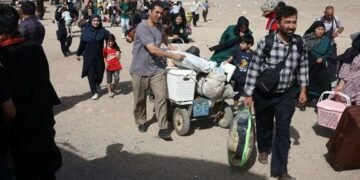
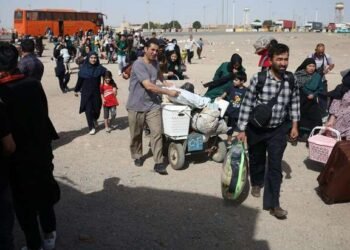
The Afghanistan Freedom Front has rejected the Taliban’s account of casualties and arrests as fabricated. It has also alleged that Taliban authorities used civilians, travelers and domestic tourists in Nuristan to portray a larger number of detainees and recorded videos of them.
Independent media reports confirm that heavy fighting has taken place in Kamdesh in recent days. However, there is currently no independently verified information establishing the actual number of casualties or the extent of any changes in territorial control.
The clashes are significant beyond the competing casualty figures. Nuristan and neighboring Kunar are mountainous areas close to Afghanistan’s eastern frontier, where security developments have added importance amid broader tensions between Afghanistan’s Taliban authorities and Pakistan.
The conflicting accounts also highlight a persistent challenge in reporting on armed conflict in Afghanistan: much of the available battlefield information comes directly from the parties involved, while independent access to contested areas remains limited.
For that reason, claims concerning deaths, injuries, arrests, captured equipment and territorial changes should be treated cautiously unless corroborated by independent sources.
At this stage, the most firmly established point is that serious fighting has taken place in Kamdesh and that the Taliban and the Afghanistan Freedom Front have offered sharply different accounts of its outcome.
The scale of the casualties and the final status of the disputed areas remain unclear.