
Ahmad Massoud, leader of Afghanistan’s National Resistance Front, has appointed Saleh Mohammad Registani as the general commander of the group’s military operations, placing a veteran figure from Afghanistan’s earlier resistance movement in a senior position within its military structure.
The National Resistance Front published the appointment order early Tuesday, September 22. In the order, Massoud instructed officials and commanders within the organization to cooperate and coordinate with Registani in accordance with the group’s structure and regulations.
The order says the appointment was made in recognition of Registani’s experience and previous record, with the stated objective of strengthening coordination and cohesion within the NRF’s military command.
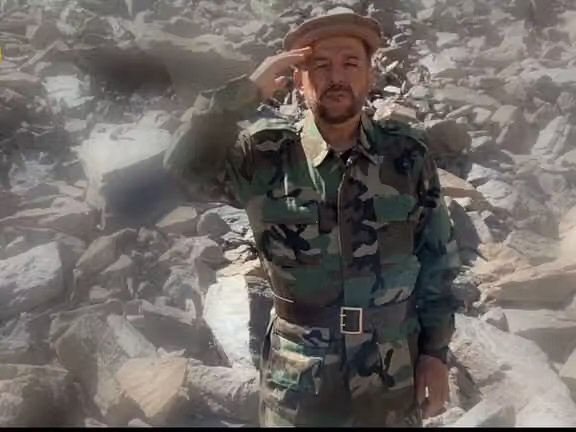
Registani is a senior figure in the National Resistance Front and previously fought during Afghanistan’s first resistance against the Taliban alongside Ahmad Shah Massoud. He was also regarded as a close associate of the former resistance leader and later remained active in Afghanistan’s military and political affairs.
The appointment came one day after Registani announced in a video that he had returned to Afghanistan and was once again in the Hindu Kush. The National Resistance Front subsequently confirmed his return.
The timing gives the appointment significance beyond an internal organizational change. Registani’s return and immediate elevation to a senior operational role place him at the center of the NRF’s military command structure, with other commanders now instructed to coordinate with him.
Ahmad Massoud also reposted the appointment order on his social media account alongside two lines from Ferdowsi’s Shahnameh, adding a symbolic dimension to the announcement.
The National Resistance Front has continued to oppose Taliban rule and has claimed responsibility for attacks against Taliban targets in different parts of Afghanistan. The Taliban has described the armed opposition as a security threat and has repeatedly said it has contained resistance activity.
However, there is currently no independent information showing what immediate operational changes will result from Registani’s appointment or whether his return will translate into a measurable increase in the NRF’s field capabilities.
The significance of the appointment therefore lies primarily in the restructuring of the NRF’s military command. Bringing an experienced commander into a senior operational position could provide the organization with a clearer coordination structure, but its practical impact will depend on whether the new command arrangement can improve coordination among commanders and sustain an effective presence inside Afghanistan.
For the NRF, the challenge is not only to establish a formal command structure but also to translate that structure into operational capacity. The coming period will show whether Registani’s return and appointment produce measurable changes in the group’s activities or remain primarily an organizational and symbolic development.