
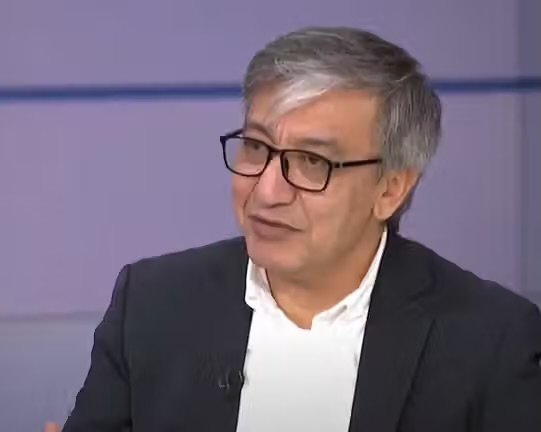
The Afghanistan Freedom Front has rejected comments by a Taliban provincial official questioning the political objectives of armed opposition groups, saying its stated goals include defending civil rights, reopening schools to girls and ending Taliban rule.
Daoud Naji, head of the Freedom Front’s political committee, made the remarks in response to statements by Rahmatullah Najib, the Taliban’s governor in Badakhshan. Najib had said that some opponents of the Taliban operate under slogans such as democracy and freedom but lack a clearly defined objective for their struggle.
Naji said the Freedom Front’s objective is to secure what he described as the rights of the Afghan people. He specifically cited reopening schools to girls and called for political and social change in Afghanistan, including an end to the current Taliban system.
The exchange reflects a wider dispute over how Afghanistan’s political future should be defined. The Taliban maintains the existing political order, while the Freedom Front publicly describes political change and the end of Taliban rule as central objectives.
Naji also criticized the Taliban’s record on the rights of women and children. He argued that the Taliban’s policies have damaged perceptions of Islam and rejected the group’s justification of its actions as necessary for protecting religion. In a pointed reference to the Taliban’s history of armed struggle, he said Islam had not been under threat in Afghanistan before the Taliban emerged and that Afghans had not abandoned their religion.
The Freedom Front has also claimed that its forces remain present in Zebak district of Badakhshan and other parts of Afghanistan and continue to conduct guerrilla operations. Naji rejected Taliban claims that armed opposition forces are no longer present inside Afghanistan.
Recent reporting confirms that fighting between the Freedom Front and Taliban forces has occurred in Zebak. In July, the Freedom Front said it had attacked Taliban positions in the district, while Taliban officials also acknowledged fighting but gave a different account of the situation. Independent reporting at the time said the claims about territorial control and battlefield gains could not always be independently verified. oai_citation:0‡Amu TV
The fighting has not been limited to isolated claims from the Freedom Front. Afghanistan International reported in August that armed opposition groups, including the Freedom Front, had intensified attacks across Afghanistan and that the pattern of fighting had in some areas shifted from mainly guerrilla operations toward more direct confrontations. oai_citation:1‡Afghanistan International
The Freedom Front’s own website has also continued to report operations in Badakhshan and other provinces, including a September 2026 report describing renewed fighting in Zebak. Such reports are claims by the organization itself and should be distinguished from independently verified battlefield developments. oai_citation:2‡جبهه آزادی افغانستان
Badakhshan has consequently emerged as one of the areas where the Taliban’s assertion of security and the armed opposition’s claims of continued operations most visibly collide. Reports from the province have described repeated clashes between Taliban forces and opposition fighters, although the scale of territorial control and the precise casualty figures remain difficult to independently establish. oai_citation:3‡Amu TV
Naji also accused the Taliban of contributing to Afghanistan’s international isolation, poverty, exploitation of natural resources and the conditions that allow militant groups to operate. These are political claims made by the Freedom Front and require independent assessment rather than being treated as established facts.
The significance of the latest exchange therefore extends beyond the statements of two opposing sides. It illustrates a fundamental political disagreement over Afghanistan’s governing system: the Taliban presents the continuation of its current rule as the basis for stability, while the Freedom Front says political change and broader public participation are necessary.
At the same time, the continued reporting of armed activity does not by itself establish the Freedom Front’s ability to alter Afghanistan’s overall balance of power. The extent of its forces, territorial influence and capacity to produce sustained political change remain difficult to independently measure.
For now, the dispute is being fought on two fronts: politically, through competing visions of Afghanistan’s future, and militarily, through continuing reports of clashes in places such as Badakhshan. The central unresolved question is whether armed opposition can translate its stated political objectives into a broader force capable of changing the country’s political structure.