
Iran is preparing to launch an international branch of Payam Noor University near the Afghanistan border, with university officials saying demand from Afghan students has increased since the Taliban banned girls and women from higher education.
Mohammad Hadi Amin Najafi, president of Iran’s Payam Noor University, made the remarks on Monday, August 10, during a visit to Taybad in Razavi Khorasan province, near the Afghan border.
He said the necessary infrastructure for establishing an international branch at the Dogharoun border crossing has been prepared and that the new unit is expected to begin operating soon.
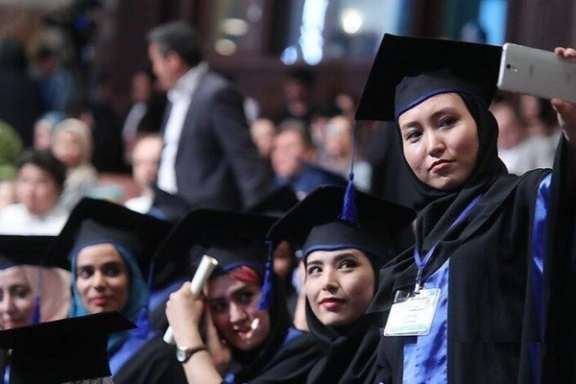
Najafi said interest among Afghan women in continuing their education at Iranian universities had increased following the Taliban’s return to power and the subsequent restrictions on women’s education.
He described Iran’s proximity to Afghanistan, particularly neighboring Herat province, as an opportunity to attract Afghan students. According to him, the new branch could provide educational opportunities for both male and female Afghan students and strengthen academic exchanges between the two countries.
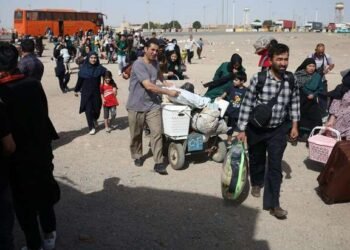
The university official also highlighted the strategic importance of Dogharoun, one of eastern Iran’s major economic border crossings. He said more than 3,500 Iranian and foreign passengers cross the border each day.
Payam Noor University is a semi-public, largely distance-learning institution established in Iran in 1988. Iranian officials say more than 1,400 male and female students are currently enrolled at its Taybad branch.
Iranian authorities also say tens of thousands of foreign students are studying in the country, with Afghans and Iraqis accounting for around 90 percent of the total.
The planned branch comes against the backdrop of the Taliban’s continuing restrictions on education. Since returning to power in August 2021, the Taliban have barred girls from secondary education beyond sixth grade and prohibited women and girls from attending universities.
The restrictions have continued despite repeated calls from the United Nations and governments around the world for schools and universities to reopen to Afghan girls and women.
For Afghan students—particularly girls and young women who have been excluded from higher education at home—the planned university branch could create an additional route to continuing their studies in Iran.
However, access to education abroad also depends on practical factors such as admission requirements, tuition and living costs, travel documents and the ability of Afghan students to cross the border legally.
The development therefore offers an educational opportunity, but it does not address the underlying issue: millions of Afghan girls and women remain excluded from secondary and higher education inside Afghanistan.