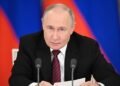

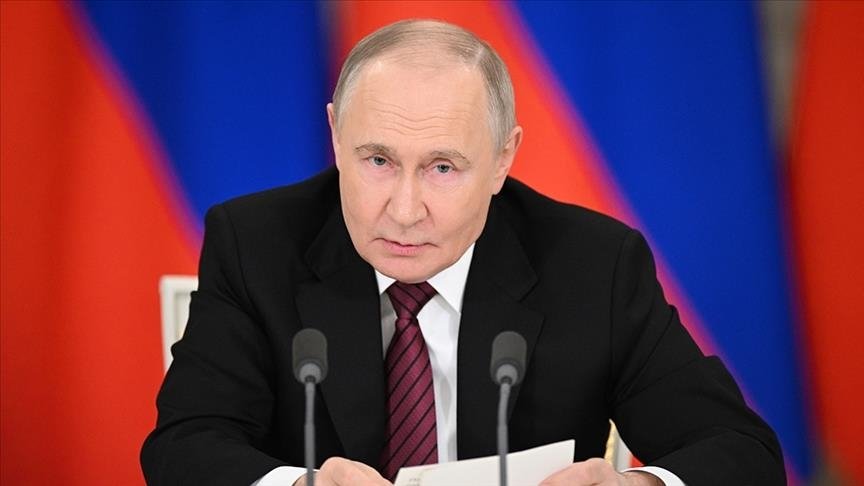
Prospects for a negotiated end to the war in Ukraine suffered another setback on Friday after Russian President Vladimir Putin rejected Volodymyr Zelenskyy’s proposal for direct face-to-face talks, arguing that such a meeting would be “pointless” under current conditions.
The exchange came after Zelenskyy published an open letter on Thursday calling for direct dialogue with the Russian leader and urging a ceasefire as a first step toward ending Europe’s largest armed conflict in decades.
Putin, however, dismissed the proposal, describing the letter as “impolite” and suggesting that it was intended to avoid creating the conditions necessary for meaningful negotiations rather than advancing a genuine political settlement.
Speaking at the St. Petersburg International Economic Forum, the Russian president reiterated Moscow’s position that any peace agreement must be reached before a ceasefire can take effect. He argued that halting military operations now would only allow Ukraine to rebuild its military capabilities and prepare for future offensives.
“Any agreement should come first, and only then a ceasefire,” Putin said, reaffirming a stance Russia has maintained in recent months.
The Russian leader also repeated Moscow’s long-standing demands, including the withdrawal of Ukrainian forces from the regions of Donetsk, Luhansk, Kherson, and Zaporizhzhia, as well as Kyiv’s abandonment of its ambitions to join NATO.
Ukraine has consistently rejected those conditions, arguing that they would require surrendering sovereign territory and accepting Russian gains achieved through military force.
Responding to Putin’s remarks, Zelenskyy accused Moscow of once again choosing war over diplomacy.
“Russia has once again chosen war,” the Ukrainian president wrote, adding that the Kremlin continues to show no genuine willingness to end the conflict.
The diplomatic impasse comes as military operations intensify on multiple fronts. Ukrainian officials said their forces targeted five vessels operating in the Sea of Azov and Russian-controlled areas, claiming the ships were involved in transporting military equipment and goods seized from occupied territories.
Meanwhile, Russian attacks across Ukraine reportedly killed at least 13 people and wounded around 70 others over the past 24 hours. Ukrainian authorities said four of the victims died in a strike on a dairy facility outside Kyiv.
Azerbaijan’s Foreign Ministry also reported that at least five people were killed in attacks involving two vessels in the Sea of Azov, highlighting the growing maritime dimension of the conflict.
More than four years into the war, the gap between the positions of Moscow and Kyiv remains substantial. Russia continues to seek international acceptance of territorial gains secured since the invasion, while Ukraine insists that any durable peace must include the restoration of its territorial integrity.
The rejection of direct talks is particularly significant because it removes one of the few diplomatic avenues that could have created momentum toward a broader political process. While both sides publicly express support for peace, their conditions remain fundamentally incompatible, leaving little room for immediate compromise.
The latest exchange suggests that the Kremlin still believes it can improve its position through military pressure rather than urgent negotiations. As a result, hopes for a near-term ceasefire appear increasingly distant, raising the likelihood of a longer and more costly conflict. Beyond the battlefield, the continued war is expected to carry significant consequences for European security, global energy markets, military spending, and the broader geopolitical balance between Russia and the West.