

Afghanistan’s environmental challenges have evolved into a far broader national crisis affecting water supplies, food security, public health, economic development, and social stability, according to a new report published by the Afghanistan Analysts Network (AAN).
Released on Wednesday, the report argues that environmental degradation can no longer be viewed solely through the lens of climate change. Instead, researchers describe a complex and interconnected crisis that is increasingly influencing the daily lives of millions of Afghans.
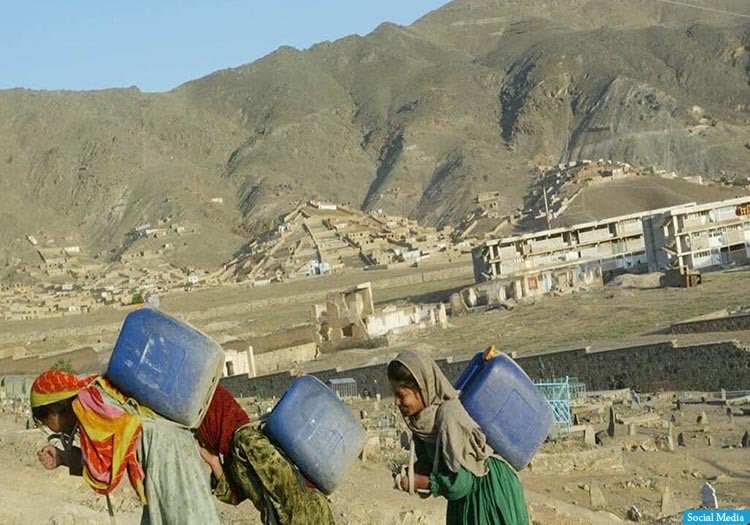
The report states that water scarcity, once associated primarily with drought-prone provinces such as Farah and Nimroz, has now become a major concern across multiple urban centers throughout the country.
While international warnings about the possibility of Kabul’s groundwater reserves being depleted by 2030 have attracted significant attention, researchers say similar pressures are emerging in many other Afghan cities.
According to the report, dry household taps, deeper well drilling, falling groundwater levels, and the inability of institutions to meet growing demand have become routine realities for many communities.
The study also describes Afghanistan’s food security situation as fragile. Although drought-resistant and improved seed distribution programs have raised hopes for increased wheat production in some areas, recurring droughts and disruptions to trade routes continue to threaten the livelihoods of millions.
Researchers note that despite contributing only a negligible share of global greenhouse gas emissions, Afghanistan remains among the countries most vulnerable to the consequences of climate change.
The report estimates that floods, droughts, landslides, avalanches, and extreme heat waves inflict annual economic losses ranging from $550 million to $3 billion.
Air pollution was identified as another major environmental threat. Researchers say Kabul experiences severe winter pollution caused by coal, wood, and low-quality fuel consumption. However, some of the country’s worst air-quality conditions have reportedly been recorded in parts of southwestern and northern Afghanistan.
The report further highlights the growing impact of dust storms linked to drought, environmental degradation, and transboundary factors, all of which are contributing to deteriorating air quality across large areas of the country.
Additional concerns include contaminated water resources, inadequate urban sewage systems, unmanaged waste accumulation, and increasing noise pollution in major cities.
NIMRUZ ANGLE
The report portrays environmental decline not as an isolated ecological issue but as a force increasingly shaping Afghanistan’s economic resilience, public health outcomes, migration patterns, and long-term social stability. The findings suggest that environmental pressures are becoming deeply intertwined with governance, development, and security challenges.
FINAL ANALYSIS
The warning issued by the Afghanistan Analysts Network underscores the scale of a crisis that extends far beyond weather patterns and climate statistics. Water scarcity, environmental degradation, and pollution are increasingly influencing how people live, work, and survive across the country. Without substantial investment in water management, urban infrastructure, environmental protection, and climate adaptation, Afghanistan could face intensified pressures on public health, economic productivity, internal displacement, and social cohesion in the years ahead. The report suggests that environmental sustainability may become one of the defining challenges shaping Afghanistan’s future development trajectory.