
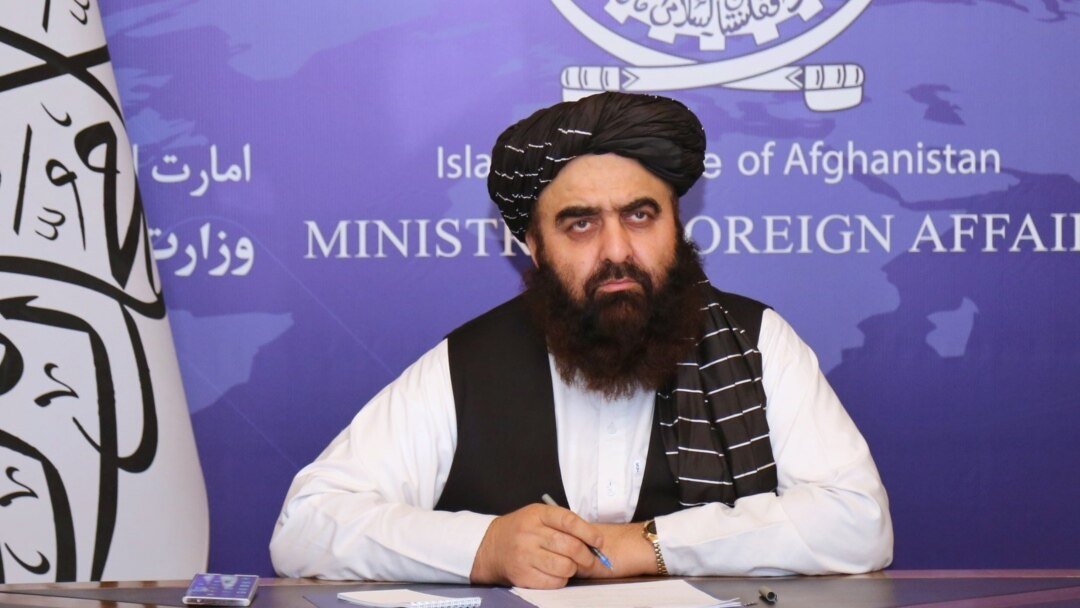
Taliban Foreign Minister Amir Khan Muttaqi has declared that no individual or political movement has a legitimate reason to oppose the Taliban administration, warning that the group will not permit what he described as rebellion or opposition against its rule.
Speaking on Wednesday at Riyaz-ul-Uloom in Kabul, Muttaqi argued that opposition to the Taliban government lacks religious legitimacy and challenged critics to explain why they continue to oppose the current administration.
“What do you want as Muslims in Afghanistan that has not been implemented?” Muttaqi asked, claiming that Islamic law is being enforced across the country and that no justification exists for disobedience or resistance.
He further stated that opposition and rebellion are unacceptable and said the Taliban would not allow anyone to organize against the government.
The remarks come as many former political leaders, civil society activists, journalists, and officials have either left Afghanistan or significantly reduced their public activities since the Taliban returned to power in 2021. Several opposition groups continue to operate from abroad, while political activity inside the country remains highly restricted.
Former President Hamid Karzai and former Chief Executive Abdullah Abdullah remain in Kabul but do not engage in open political activity. Critics of the Taliban argue that Afghanistan’s political landscape has become increasingly closed, leaving little room for organized opposition, political parties, or independent civic engagement.
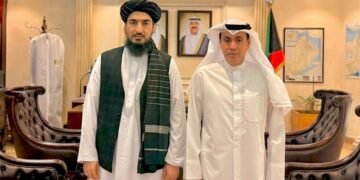
Muttaqi also used the speech to highlight what he described as growing diplomatic, political, and economic relations between the Taliban administration and other countries. He claimed that Afghan diplomatic missions are active in most neighboring and regional states, with only one neighboring country remaining outside Taliban control.
However, Afghanistan’s embassy in Tajikistan continues to operate under diplomats appointed by the former Afghan republic. More broadly, the Taliban have yet to secure Afghanistan’s seat at the United Nations, which remains held by representatives associated with the previous government.
The foreign minister also claimed that Taliban representatives have gained control over some Afghan consular and diplomatic functions in several Western countries. Western governments, however, have repeatedly emphasized that technical engagement and consular cooperation do not constitute formal recognition of the Taliban administration.
“We do not expect countries that fought us for 20 years to shower us with flowers,” Muttaqi said while discussing relations with Western governments.
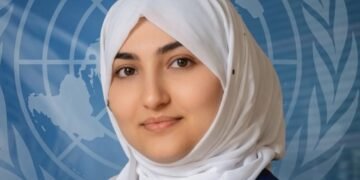
Despite ongoing diplomatic outreach, Russia remains the only country to have formally recognized the Taliban government. Recent developments at the United Nations, including the election of Nasir Ahmad Faiq to a senior General Assembly position, underscored that the international community continues to recognize Afghanistan’s existing UN mission rather than Taliban-appointed representatives.
Muttaqi also reiterated the Taliban’s commitment to what he described as an independent and neutral foreign policy, insisting that Afghanistan would not take sides in regional or international rivalries.
On economic issues, he argued that Afghanistan’s trade and transit links with neighboring countries continue to expand. He said alternative trade routes would remain available even if existing commercial corridors were disrupted.
NIMRUZ ANGLE
Muttaqi’s remarks reveal two parallel objectives of Taliban policy. Domestically, the movement continues to reject the legitimacy of organized political opposition and presents its rule as the only acceptable governing framework. Internationally, however, Taliban leaders are seeking broader engagement and recognition by emphasizing diplomatic outreach, economic cooperation, and regional connectivity.
FINAL ANALYSIS
The speech highlights the central challenge facing the Taliban nearly four years after returning to power. While the group argues that its authority is secure and its foreign relations are expanding, international recognition remains limited and political pluralism inside Afghanistan remains absent. The contrast between growing diplomatic contacts and the continued lack of formal recognition reflects the gap between practical engagement and political legitimacy. As the Taliban seek deeper economic and diplomatic integration, questions surrounding representation, political participation, and international acceptance are likely to remain at the center of Afghanistan’s future.