
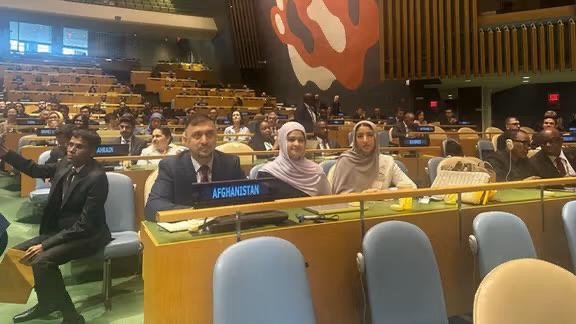
Afghanistan has been elected as one of the vice presidents of the 81st session of the United Nations General Assembly, marking a significant diplomatic development as questions over the country’s representation at the UN remain unresolved.
The election took place on Tuesday when member states selected the president, vice presidents, and bureau members for the upcoming session of the General Assembly. Bangladesh Foreign Minister Khalilur Rahman won the presidency of the 81st session after receiving 99 votes out of 190 cast.
Nasir Ahmad Faiq, head of Afghanistan’s permanent mission to the United Nations, confirmed that Afghanistan was among the countries chosen to serve as vice presidents of the new session.
Speaking to Afghanistan International, Faiq said the election reflected the continued diplomatic engagement of Afghanistan’s mission at the United Nations and the efforts undertaken by its representatives over recent years.
“This achievement is the result of continuous diplomatic work and engagement within the United Nations system,” Faiq said.
He also noted that Afghanistan’s continued presence on the UN agenda and the international community’s sustained attention to developments in the country contributed to the outcome.
The General Assembly is one of the United Nations’ most important forums for international dialogue and decision-making. Vice presidents assist in managing sessions, coordinating procedural matters, and supporting the work of the Assembly throughout its annual term.
The development is particularly notable because Afghanistan’s UN seat remains held by representatives appointed by the former Afghan republic. The Taliban administration has repeatedly sought international recognition and control of the country’s UN representation but has not succeeded in obtaining the seat.
As a result, Afghanistan’s election to a senior position within the General Assembly carries significance beyond protocol. It demonstrates that the country’s existing diplomatic mission continues to play an active role within the UN system despite ongoing political uncertainty over Afghanistan’s future representation.
NIMRUZ ANGLE
The election is not simply a procedural appointment. It signals that the current Afghan mission retains diplomatic credibility and operational influence within the United Nations at a time when the issue of international recognition remains unresolved. The outcome also suggests that member states continue to engage with Afghanistan through existing diplomatic channels rather than altering the country’s representation framework.
FINAL ANALYSIS
Afghanistan’s selection as a vice president of the 81st General Assembly underscores the country’s continuing relevance within international diplomacy. At a time when debates over recognition of the Taliban remain unresolved, the election sends a message that the international system is still relying on the existing UN mission to represent Afghanistan. The development may not change the political status of the Taliban administration, but it reinforces the importance of Afghanistan’s diplomatic presence in global institutions and highlights the continued international focus on the country’s future.