
The World Bank says Afghanistan’s economy continues to face serious challenges despite recording limited economic growth over the past year.
In its latest monthly report released Tuesday, the institution said population growth, rising inflation, and declining foreign aid have increased pressure on household livelihoods and weakened living standards across the country.
According to the report, Afghanistan’s economy continued to grow modestly despite regional tensions and border closures, with real gross domestic product estimated at around 4.8 percent.
The World Bank said the limited growth was largely driven by rising domestic demand and the return of millions of Afghan migrants, factors that increased household consumption and market activity.
However, the institution warned that the return of approximately 3.7 million migrants has outpaced economic growth, causing per capita GDP to decline by 5.6 percent.
The report stated that inflation averaged 3.6 percent during fiscal year 2025 and rose to 7.6 percent by March 2026.
The World Bank attributed rising prices to declining agricultural production, stronger demand, and trade disruptions, warning that inflation has significantly reduced the purchasing power of Afghan households, especially poorer families.
The institution added that poverty and food insecurity have worsened across Afghanistan, with around 14 million people facing acute food insecurity by late 2025.
Estimates suggest the figure could rise to 17.4 million people — nearly 40 percent of Afghanistan’s population — during the coming winter.
The World Bank also said declining foreign assistance has limited the Taliban administration’s ability to invest in infrastructure and respond to economic crises.
In another section of the report, Afghanistan’s external economy was described as “fragile,” with rising imports and weak exports widening the country’s trade deficit.
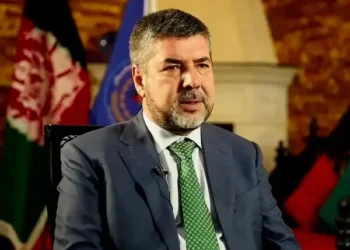
Faris Hadad-Zervos, the World Bank’s country director for Afghanistan, said: “Afghanistan’s economy has shown some resilience against major challenges, but economic growth alone is not enough.”
He warned that rapid population growth is outpacing economic gains, reducing incomes and deepening poverty.
The World Bank predicts Afghanistan’s economic growth could slow to around 4 percent in 2026.