
The Taliban has condemned any action threatening the security and sanctity of Islam’s holiest sites after Saudi Arabia said it intercepted and destroyed a Houthi drone south of Mecca. The Houthis have denied targeting the holy city, leaving the drone’s intended target disputed.
Abdul Qahar Balkhi, spokesperson for the Taliban’s Foreign Ministry, said any action that threatens the security or sanctity of Muslim holy sites would be an “unforgivable crime.” He stressed that the Two Holy Mosques are shared sacred sites respected by Muslims around the world and should remain protected from the consequences of conflict, violence and military operations.
The Taliban statement followed an announcement by the Saudi-led coalition that Saudi air defenses intercepted a drone south of Mecca on Tuesday evening, before it entered the restricted airspace over the holy city. Coalition spokesperson Turki al-Malki said the drone was destroyed at about 6:50 p.m. local time and described the security of the Two Holy Mosques and pilgrims as a “red line.” oai_citation:0‡Reuters
Saudi Arabia attributed the drone to Yemen’s Houthi movement and characterized the incident as the second known attempt by the group to target Mecca, referring to a ballistic-missile incident in 2017. oai_citation:1‡Reuters
The Houthis, however, have rejected the accusation. Houthi officials have denied targeting Mecca or other Islamic holy sites and have described Saudi Arabia’s allegation as false. The group has claimed responsibility for attacks against Saudi targets elsewhere while rejecting the claim that the holy city was the intended objective. oai_citation:2‡The National
That conflicting account is central to the incident. Saudi Arabia says the drone was launched by the Houthis and was approaching the restricted airspace around Mecca, while the Houthis deny targeting the city. Publicly available reporting does not independently establish the drone’s intended destination beyond these competing claims.
The Taliban’s response notably did not endorse either side’s account of the incident. Instead, its statement focused on the principle that the Two Holy Mosques should be protected from regional military confrontation. This places the Taliban’s message within a broader effort by Muslim-majority governments and organizations to emphasize the protection of religious sites amid the expanding regional conflict.
The incident comes as fighting between Saudi Arabia and the Houthis has intensified. Reuters reported that Houthi forces have launched drones and missiles toward Saudi targets while Saudi warplanes have carried out strikes in Yemen, widening another front in the broader Middle Eastern conflict. oai_citation:3‡Reuters
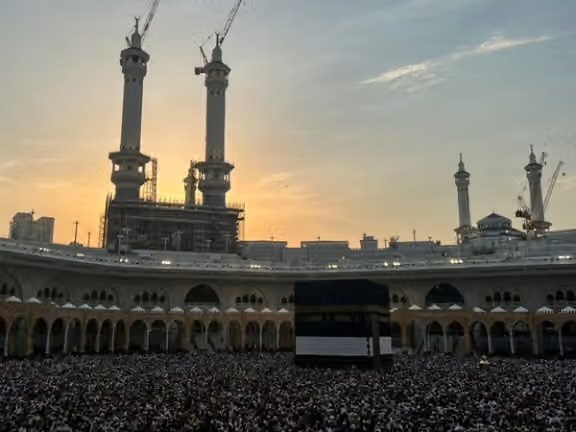
The proximity of the reported interception to Mecca has given the incident particular religious and political significance. Mecca is Islam’s holiest city and the focal point of the annual Hajj pilgrimage, making any reported military activity near its restricted airspace especially sensitive. oai_citation:4‡Internazionale
For the Taliban, the statement is also significant because it allows the group to publicly emphasize its position on the protection of Islamic holy sites without taking a definitive position on the disputed question of the drone’s intended target.
The immediate facts therefore remain divided between two narratives. Saudi Arabia says it intercepted a Houthi drone before it entered Mecca’s prohibited airspace, while the Houthis deny targeting the holy city. Until further evidence becomes available, the alleged intention behind the drone should be treated as disputed rather than independently established.
What is clear is that the incident has added a highly sensitive religious dimension to an already widening regional conflict. The Taliban’s condemnation underscores the importance it places publicly on protecting the Two Holy Mosques, while the competing Saudi and Houthi accounts leave responsibility for any intended attack on Mecca unresolved.