
Israel has accused Iran of committing a “major mistake” after Tehran launched a new wave of missiles toward Israeli territory, triggering air raid sirens across multiple regions and raising fears of a renewed escalation in the Middle East.
Speaking on Sunday, Israeli military spokesman Effie Defrin said Iran would bear responsibility for the consequences of its actions. He described the missile launch as another example of Tehran choosing what he called “the path of terror” instead of de-escalation.
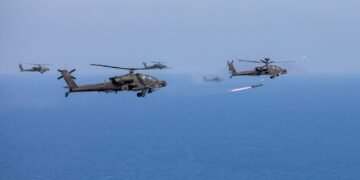
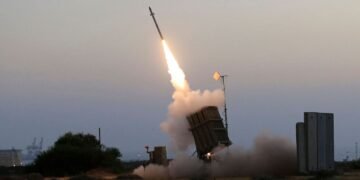
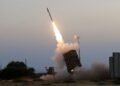
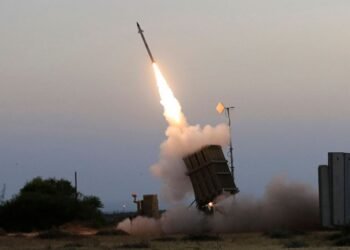
The Israeli military said its air defense systems were activated to intercept several waves of incoming missiles launched from Iran. Authorities did not immediately provide details regarding casualties or damage caused by the attack.
According to Israeli officials, the strike marks Iran’s first direct missile attack against Israel since the ceasefire that followed the broader regional conflict earlier this year. The development has raised concerns that months of relative calm could be coming to an end.
Iran’s Islamic Revolutionary Guard Corps said the missile launch was intended as a warning and described it as a response to a recent Israeli strike in Beirut’s southern suburbs, an area widely regarded as a stronghold of Hezbollah.
Earlier, the office of Israeli Prime Minister Benjamin Netanyahu stated that Israeli forces had targeted what it described as a militant command center in southern Beirut. Lebanese health authorities reported that the attack killed at least two people and wounded around twenty others.
At the same time, Hezbollah confirmed that it had launched missiles and drones against two Israeli military positions on Sunday morning, adding another layer to an already volatile security situation.
In Tehran, Iranian Parliament Speaker Mohammad Bagher Ghalibaf accused the United States of supporting Israeli military actions. He argued that Washington’s backing of Israel had transformed American and Israeli interests in the region into what he called legitimate targets.
Iran’s Khatam al-Anbiya Central Headquarters also condemned the Beirut strike, saying Israel had crossed all red lines and calling for an immediate halt to military operations in Lebanon.
The latest exchange highlights the growing fragility of the regional ceasefire and underscores how quickly local incidents can escalate into broader confrontations involving multiple actors across the Middle East.
Despite ongoing diplomatic efforts aimed at preventing a wider war, the cycle of missile attacks, retaliatory strikes, and increasingly aggressive rhetoric suggests that tensions remain dangerously high. With Israel, Iran, and Hezbollah all signaling readiness to respond to future attacks, the risk of a larger regional conflict continues to grow.
Beyond the immediate military dimension, any prolonged escalation could have far-reaching consequences for regional stability, global energy markets, international shipping routes, and diplomatic efforts aimed at containing one of the world’s most volatile geopolitical crises.